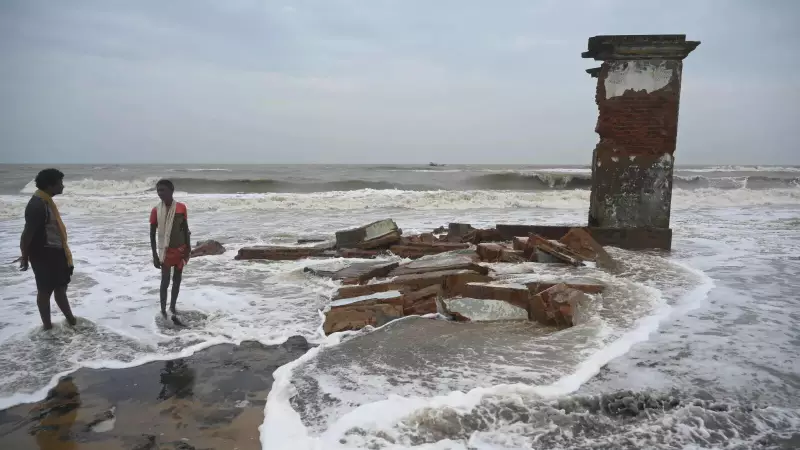
The relentless advance of the sea has forced a painful exodus in coastal Odisha, trading ancestral homes for safety but severing the vital connection to land and livelihood. For octogenarian Krushna Chandra Behera and his community, relocation to government colonies has come at a steep, personal cost.
Safety at the Cost of Survival
As rising sea levels and coastal erosion consumed their village, residents had little choice but to accept a move to designated resettlement areas. While these new colonies offer a crucial escape from the immediate threat of the encroaching ocean, they have created a different set of crippling challenges. The promise of safety has been overshadowed by the loss of economic sustenance.
Krushna Chandra Behera, a man in his eighties, voices the collective despair of the displaced. He acknowledges that some in the community were allotted fertile land in the resettlement plan. However, the practicalities of accessing that land are daunting, if not impossible, for the elderly and many others.

The Impossible Daily Commute
The central problem is one of sheer distance and perilous terrain. To reach their farmlands, the uprooted villagers must undertake a grueling daily journey. This involves traveling 12 kilometers and navigating a treacherous path through the dense Bhitarkanika mangrove forest. The final hurdle is crossing a river known to be infested with crocodiles.
"Who will travel 12km daily to carry on farming after crossing the Bhitarkanika mangrove forest and a crocodile-infested river?" Behera asks, highlighting the impracticality of the situation. For an aging population, this commute is not just inconvenient; it is a dangerous barrier that effectively cuts them off from their primary source of income and food security.
A Broader Warning for Coastal India
This situation in Odisha is not an isolated incident but a stark microcosm of a larger crisis facing India's long coastline. It underscores a critical gap in rehabilitation policy: providing shelter is only the first step. True resettlement must include viable, accessible livelihood options.
The plight of Krushna Chandra Behera, reported in early January 2026, serves as a poignant reminder. Climate-induced displacement is creating a generation of environmental refugees who are safe from the waves but adrift from their means of survival. The story calls for a more holistic approach to disaster management, one that integrates economic rehabilitation with physical relocation to ensure displaced communities can truly rebuild their lives.