Sudan's Army Makes Major Advance in Conflict with RSF
The Sudanese army has achieved one of the most significant military advances in its two-year-old conflict with the paramilitary Rapid Support Forces (RSF). In a major development, the army has seized full control of the Presidential Palace in Khartoum, marking a pivotal moment in the ongoing power struggle that has devastated the country.
Strategic Victory in Khartoum
This breakthrough represents a substantial shift in the landscape of Sudan's internal conflict. The Presidential Palace, located in the capital city of Khartoum, has been a symbolic and strategic battleground throughout the hostilities. The army's successful takeover indicates a potential turning point in the prolonged and deadly confrontation with the RSF paramilitary forces.
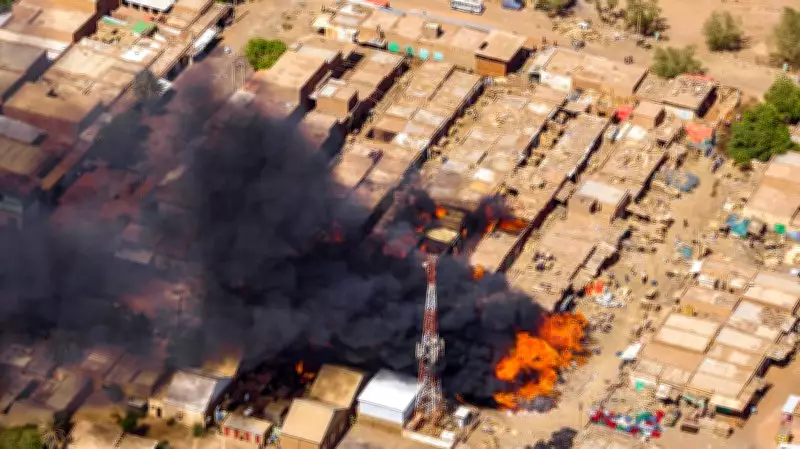
The conflict between the Sudanese army and the Rapid Support Forces has been raging for two years, resulting in widespread destruction, displacement of civilians, and significant loss of life. The fighting has particularly impacted urban centers, with Khartoum experiencing some of the most intense clashes. An aerial photo from the conflict zone shows the aftermath in the Al-Arab neighborhood market in Omdurman, where flames and destruction illustrate the severe toll of the violence.

Implications for Sudan's Future
The army's control of the Presidential Palace could potentially alter the dynamics of the conflict and influence future negotiations or military strategies. This development comes amid international concerns about the humanitarian crisis in Sudan and calls for peaceful resolution of the power struggle.
Observers note that while this represents a significant advance for the army, the broader conflict remains complex and unresolved. The Rapid Support Forces, which originated from the Janjaweed militias, have demonstrated considerable resilience and control over other territories throughout Sudan. The power struggle between these two armed factions has created a fragmented security landscape with profound implications for governance and stability.
The international community continues to monitor the situation closely, with particular attention to civilian safety and the potential for escalation or de-escalation following this latest development. Humanitarian organizations have repeatedly warned about the deteriorating conditions for Sudanese civilians caught in the crossfire of this protracted conflict.