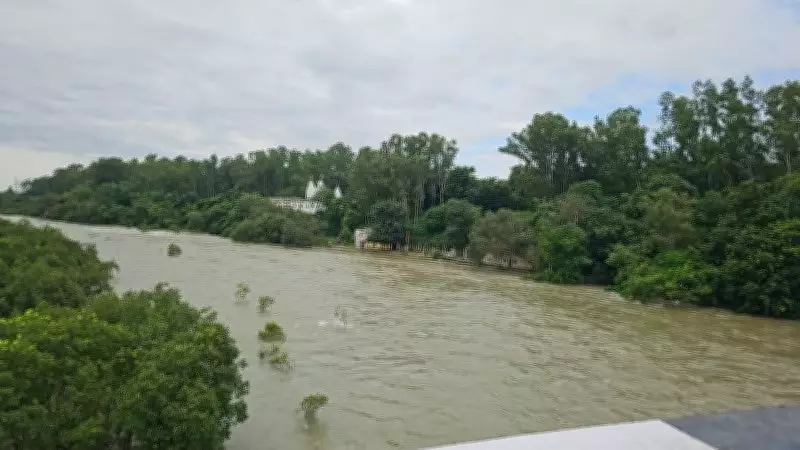
The Sutlej River is running dry downstream of the Ropar Headworks during the summer months, raising serious ecological concerns across six districts of Punjab: Ropar, Nawanshahr, Ludhiana, Moga, Fazilka, and Ferozepur. Environmentalists and water experts warn that the current river management policy, which prioritizes irrigation and hydropower, is failing to sustain the river's ecological health.
Environmental Flows Recognised but Inadequate
Official records reveal that the issue of environmental flows was first acknowledged during the 95th meeting of the Bhakra Beas Management Board (BBMB) Irrigation Sub-Committee in February 2020. The committee calculated minimum environmental flows at 640 cusecs downstream of the Ropar Headworks on the Sutlej and 370 cusecs downstream of the Harike Headworks on the Beas. These figures were based on 15 per cent of the average lean-season discharge, in line with directions from the National Green Tribunal (NGT) in the Pushp Saini vs Ministry of Environment, Forest and Climate Change case. The NGT mandated that rivers maintain environmental flows equivalent to 15 to 20 per cent of their average lean-season discharge.
However, experts argue that this volume is insufficient. Any additional water released into the Sutlej's natural course downstream of Ropar Headworks during summer is deducted from Punjab's share of water from BBMB projects, creating a disincentive for releasing more water.

Impact on Sewage Dilution and Groundwater
Environmentalist Col Jasjit Singh Gill highlighted that Ludhiana alone discharges between 200 and 300 cusecs of sewage into the Sutlej. During summer, the river lacks enough water to dilute and flush this sewage downstream, leading to contamination of groundwater in and around the river's natural course. Gill stated, "A minimum discharge of 2,000 to 3,000 cusecs in the natural channel of the Sutlej downstream of the Ropar Headworks is essential to preserve its ecology."
The dry riverbed also invites illegal sand mining, as the lack of flowing water allows unrestricted excavation by the sand mafia.
Outdated Terminology and Management Mindset
Another point of criticism is the accounting terminology used in water management. Documents, including references in the interim report of the Ravi-Beas Water Tribunal, categorize water flowing downstream of the Ropar Headworks as "Waste Sutlej Water." Environmentalists contend that such terminology reflects an outdated mindset. They argue, "A river performing ecological functions can never be considered waste. Environmental flows should be treated as the river's first right, not as surplus remaining after everyone else has taken their share."
Experts maintain that the existing system was designed primarily to deliver water to beneficiary states through an extensive canal network for irrigation and power generation, with little attention paid to maintaining natural river flows. With climate change placing increasing stress on water resources, they believe Punjab's rivers can no longer be managed solely as engineering structures.
Call for Overhaul of Reservoir Operations
Experts call for an overhaul of reservoir operations to prioritize environmental flows. They warn that unless environmental flows are given priority, Punjab may continue to lose not only its flowing rivers but also the ecological services and livelihoods that healthy rivers sustain. The future of the Sutlej and Beas depends on recognizing that rivers are living ecosystems requiring dedicated water allocations for their survival.