

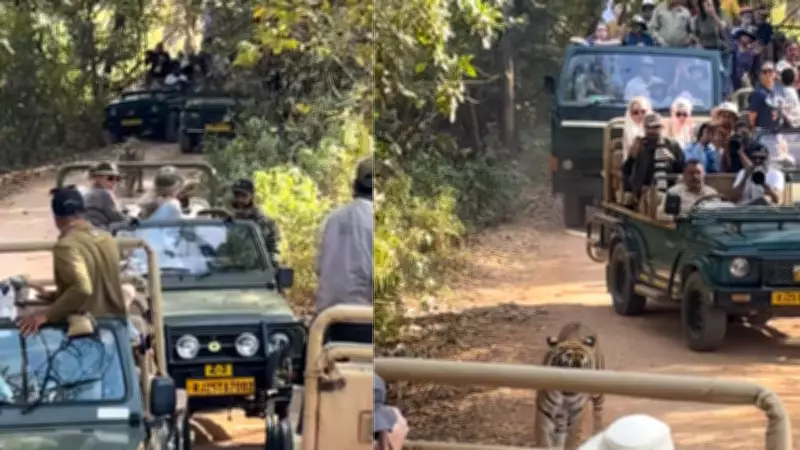
Viral Video Captures Distressing Scene of Tiger Surrounded by Safari Vehicles in Ranthambore
A shocking video from Rajasthan's renowned Ranthambore National Park has ignited a firestorm on social media, capturing a distressing moment where a majestic tiger finds itself encircled by multiple safari jeeps. The footage, originally shared by Instagram user Monty Bhatt, presents a troubling tableau of wildlife tourism gone awry.
Crowded Safari Vehicles Create Traffic Jam-Like Situation
The video vividly depicts numerous safari vehicles crowding along a narrow park road, effectively trapping the tiger with minimal space to move freely. As more jeeps arrive at the scene, the situation escalates into what resembles an urban traffic jam, but with a wild tiger at its center instead of automobiles. Tourists can be clearly seen enthusiastically capturing photographs while the confused predator pauses, seemingly uncertain how to navigate the human-made barrier surrounding it.
In his accompanying caption, Bhatt poignantly noted, "The tiger came very close and the jeeps didn't give the space to the Tiger in Ranthambore National Park." This simple observation has resonated deeply across digital platforms, transforming the clip into a viral sensation that transcends mere wildlife documentation.

Social Media Erupts with Criticism and Concern
The video has triggered an avalanche of criticism from concerned citizens and wildlife enthusiasts worldwide. Social media users have expressed profound discomfort with how the animal was surrounded, describing the scene as both stressful for the creature and fundamentally unfair.
Many commentators have highlighted the serious welfare implications, noting that such intense crowding can dramatically elevate stress levels in wild animals and potentially provoke defensive behaviors that endanger both animals and tourists. One particularly poignant comment read, "The tiger looks more civilised and mature among all these humans around," emphasizing the stark contrast between human behavior and animal dignity.
Another user offered sarcastic praise, stating, "The Indian forest department deserves praise for its efficient management of safari operations in India. The tiger seems to be facing a traffic jam in its own home." Meanwhile, a more despairing observation lamented, "Sad. Where's the wild in this? It's worse than a zoo! At least humans can't enter its enclosure there."
Broader Implications for Wildlife Tourism Management
This incident has reignited crucial conversations about sustainable wildlife tourism practices and proper safari management protocols. The viral footage serves as a stark reminder of the pressing need for enhanced regulations governing vehicle distances during animal sightings in national parks across India.
Wildlife experts consistently emphasize that maintaining respectful distances is not merely about tourist safety but is essential for animal welfare, natural behavior preservation, and minimizing human-induced stress on endangered species. The Ranthambore incident underscores how current practices sometimes fall short of these ideals, potentially compromising the very wilderness experiences tourists seek.
As India's wildlife tourism sector continues to expand, balancing accessibility with conservation ethics remains an ongoing challenge. This viral moment may catalyze renewed efforts toward developing more responsible safari protocols that prioritize animal wellbeing while still allowing for meaningful wildlife encounters.






