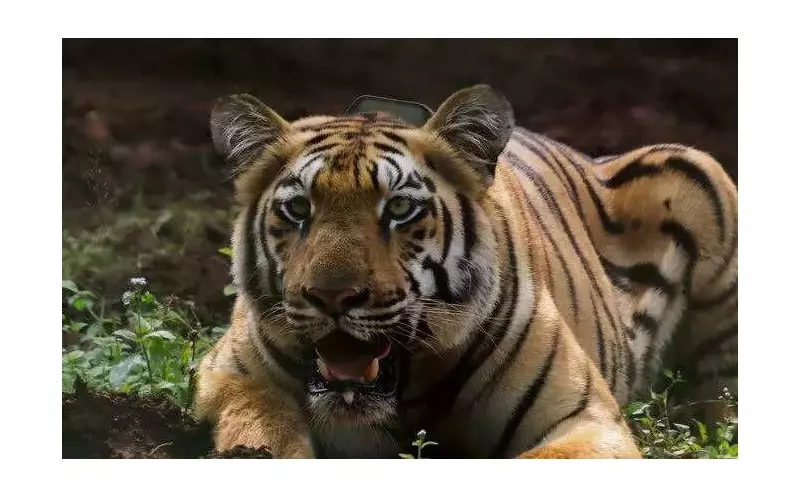
Tigress Yamuna's Year-Long Stay in Kuldiha Raises Mating Concerns
Uncertainty clouds the mating prospects of tigress Yamuna. She has confined herself to Kuldiha wildlife sanctuary for more than a year now. A critical issue persists: the sanctuary currently lacks a male tiger. Yamuna shows no signs of returning to the Similipal Tiger Reserve. Officials released her there in October 2024 after bringing her from the Tadoba-Andheri Tiger Reserve.
Tracking Yamuna's Movements and Behavior
Similipal field director Prakash Gogineni provided details on Yamuna's activities. Radio collar data traces her movement to different parts of Kuldiha. Camera traps have not captured any images of her spending time with a male tiger. Despite this, she appears agile and continues to hunt prey successfully.
Gogineni outlined two clear possibilities for Yamuna's chance to mate. First, if the tigress walks into Similipal territory, she might encounter a male tiger. Second, a male tiger could go to Kuldiha and meet Yamuna there. The Similipal biosphere reserve includes the tiger reserve's two divisions: Kuldhia wildlife sanctuary and Hadgarh wildlife sanctuary.

From Dispersal to Apparent Settlement
Yamuna crossed the geographical boundary of Similipal just days after her release. She entered Kuldiha shortly thereafter. Initially, this move looked like dispersal behavior. However, her stay exceeding one year now indicates a surprising stability. A wildlife officer confirmed this assessment, noting her settled status.
The last time Yamuna was in Similipal's core area occurred during a ten-day period. Officials lodged her in a soft enclosure before releasing her into the wild. Although Kuldhia forms part of the larger Similipal biosphere and connects to it, Yamuna has not visited Similipal since.
Parallel Case: Tigress Zeenat's Experience
Another tigress named Zeenat faces similar challenges. Officials released her in Similipal after Yamuna. Zeenat settled in the core area but dispersed to Jharkhand and West Bengal in December 2024. Authorities brought her back to Similipal on January 1 last year.
Wildlife officials reported mating indicators for Zeenat in May of last year. Camera trap pictures initially suggested potential activity. Unfortunately, no further indications emerged after that period.
Broader Implications for Genetic Diversity
The situation with both tigresses creates ongoing uncertainty. Finding mates remains crucial for bringing genetic diversity to Similipal's big cat population. The tiger population there has grown at an annual rate of 18% since 2014. However, a significant problem exists: approximately 50% of the population displays pseudo-melanistic traits.
National Centre for Biological Sciences scientist Uma Ramakrishnan conducted research in 2021. Her work suggested that genetic diversity is essential. It helps check pseudo-melanism, a trait linked to inbreeding. Sustaining big cats in Similipal long-term depends on addressing this genetic issue.