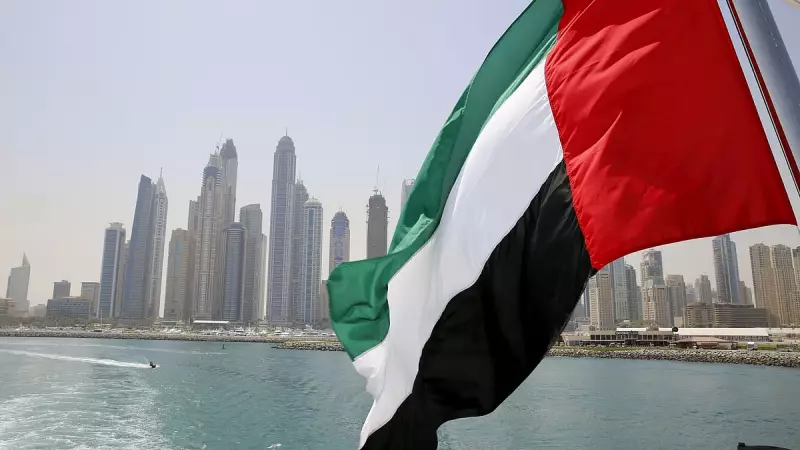
UAE Imposes Airspace Restrictions for Military Activities Against Iran
The United Arab Emirates (UAE) has officially announced a ban on the utilization of its sovereign airspace for any military actions directed at Iran. This significant geopolitical move comes at a time of heightened uncertainty in the region, particularly following recent provocative statements from the United States.
Escalating Tensions Following US President's Remarks
Uncertainty regarding the potential for military confrontation with Iran has been steadily mounting. Last week, US President Donald Trump declared that a formidable naval 'armada' was en route toward Iranian waters. However, in a somewhat contradictory statement, he expressed hope that he would not be compelled to deploy this military force aggressively.
President Trump's comments have injected a new layer of volatility into an already tense Middle Eastern landscape. Regional powers, including the UAE, are now taking precautionary measures to avoid being drawn into a potential conflict.

Strategic Implications of the UAE's Decision
The UAE's decision to restrict its airspace for military operations against Iran carries profound strategic implications:
- Diplomatic Positioning: This move signals the UAE's intent to maintain a degree of neutrality and avoid direct involvement in any US-led military campaign against Iran.
- Regional Stability: By limiting the avenues for potential aerial attacks, the UAE aims to de-escalate tensions and prevent the rapid outbreak of a wider regional war.
- Economic Considerations: The UAE, a major global trade and tourism hub, has a vested interest in preserving stability to protect its economic interests from the disruptive effects of conflict.
The timing of this announcement is particularly critical, as it follows a period of intense diplomatic maneuvering and military posturing by various international actors in the Persian Gulf region.
Broader Context of US-Iran Relations
The longstanding adversarial relationship between the United States and Iran has been marked by periods of intense hostility and fragile diplomatic engagements. The recent deployment of a US naval fleet, described as an 'armada' by President Trump, represents one of the most overt military threats in recent years.
Analysts suggest that the UAE's airspace restriction could complicate any potential US military planning, forcing alternative logistical considerations. It also reflects a growing trend among Gulf Cooperation Council (GCC) nations to pursue more independent foreign policies, rather than aligning unconditionally with Washington's strategic objectives.
As the situation continues to evolve, the international community remains watchful of further developments. The UAE's decisive action underscores the complex geopolitical calculations at play, where regional powers must balance alliances, security concerns, and economic imperatives in an increasingly unpredictable global environment.