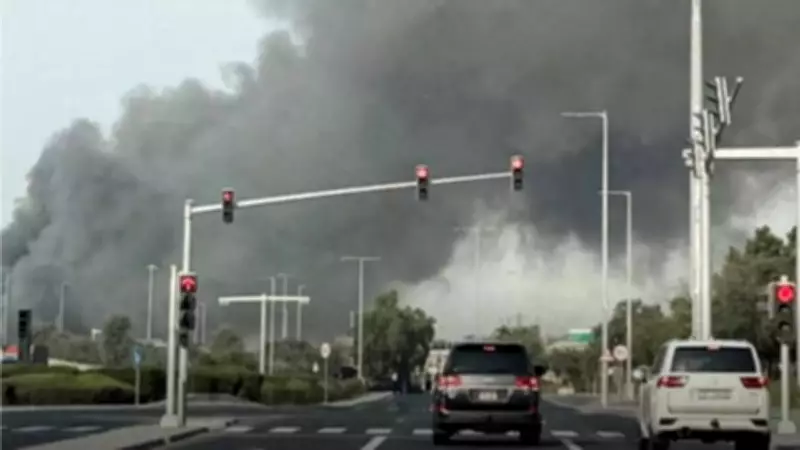
UAE Confirms Civilian Death in Abu Dhabi Missile Strike Amid Regional Conflict
The ongoing Middle East conflict has cast a long shadow over the Gulf region, with the United Arab Emirates confronting one of the most serious security incidents directly linked to the regional crisis. Authorities in the emirate of Abu Dhabi confirmed that a missile struck a civilian vehicle in the Al Bahyah district, resulting in one fatality and triggering an immediate emergency response from local security and civil defence teams.
Details of the Fatal Incident in Al Bahyah
The victim was identified as a Palestinian national, marking one of the few fatal incidents reported inside the UAE since regional tensions escalated dramatically. The incident occurred in the Al Bahyah area on the outskirts of the capital, where emergency authorities responded swiftly after reports emerged of a missile falling onto a civilian car. Officials confirmed that the strike resulted in one death while response teams secured the site and launched comprehensive investigations into the circumstances surrounding the attack.
While the UAE has largely managed to intercept incoming threats during the ongoing conflict, the attack in Al Bahyah highlights how regional hostilities can still reach civilian areas despite advanced defensive measures. According to official statements, the missile struck a civilian vehicle directly, resulting in the death of the occupant before emergency services could intervene.

Security Context and Regional Tensions
Authorities did not immediately disclose the precise origin of the missile, but the incident comes amid broader hostilities linked to the war involving Iran, the United States and Israel. The UAE has significantly strengthened its air defence systems in recent years, and government data indicates that since the conflict intensified, air defence systems have engaged hundreds of incoming projectiles, including ballistic missiles, cruise missiles and drones aimed at targets across the country.
Despite these defensive successes, authorities acknowledged that isolated incidents can still occur, particularly when debris or projectiles fall after interception attempts. The Al Bahyah strike has therefore become a stark reminder of the unpredictable nature of modern warfare and how even highly protected countries can face sudden security risks during regional conflicts.
Government Response and Public Communication
Following the incident, officials emphasised the need for calm and responsible communication among residents. Authorities urged the public to rely only on verified government channels for updates and warned against spreading rumours or unconfirmed reports on social media. The advisory stressed that circulating misleading or unverified information during security incidents could hinder emergency response operations and create unnecessary panic among the population.
Officials also reiterated that authorities are continuing to monitor the situation closely and will provide updates through official platforms. In recent weeks, the UAE has taken a firm stance against misinformation related to the conflict, warning that spreading false information online could result in legal consequences. Authorities say such measures are necessary to maintain public safety and ensure accurate communication during times of crisis.
Broader Regional Implications
The missile incident in Abu Dhabi comes as the wider Middle East experiences a surge in military activity linked to the escalating confrontation between Iran and the US-Israel alliance. The conflict has already resulted in missile and drone attacks across several parts of the Gulf region, including incidents affecting airports, energy infrastructure and shipping routes. These developments have placed Gulf countries on heightened alert.
Governments across the region have reinforced air defence systems and intensified surveillance to prevent attacks on civilian and economic infrastructure. The Gulf's strategic importance to global energy and aviation networks means that even isolated incidents can have wider implications. Oil shipping routes through the Strait of Hormuz, aviation corridors across the region and major commercial hubs such as Dubai and Abu Dhabi all play critical roles in international trade and travel.

As a result, security threats linked to the conflict are being closely monitored not only by regional governments but also by global markets and international organisations.
Impact on UAE Residents and Daily Life
Despite the seriousness of the incident, authorities have reassured residents that security forces remain fully prepared to handle emerging threats. Emergency services responded swiftly to the Al Bahyah strike, securing the area and coordinating with law-enforcement agencies to investigate the event. Residents have been urged to remain calm and continue following official guidance issued by government authorities.
Public safety agencies have also reiterated that the UAE maintains one of the region's most advanced security and civil defence infrastructures, enabling rapid responses to emergencies. Nevertheless, the fatal strike serves as a sobering reminder of the human cost of regional conflict.
The death of the Palestinian national underscores how geopolitical tensions can sometimes spill into civilian life, even in countries far from the primary battlefield. The attack also reflects the growing complexity of the conflict now unfolding across the Middle East. As hostilities intensify, missile and drone warfare has become an increasingly common tactic, allowing conflicts to extend far beyond traditional front lines.
For Gulf nations such as the UAE, maintaining stability amid regional turbulence has become a key priority. Governments are balancing strong defensive measures with diplomatic efforts aimed at de-escalation and regional security cooperation. For now, the incident in Al Bahyah remains under investigation, with authorities continuing to assess the circumstances surrounding the missile strike. Officials have reiterated that public safety remains their top priority and that updates will be provided through official channels as more information becomes available.