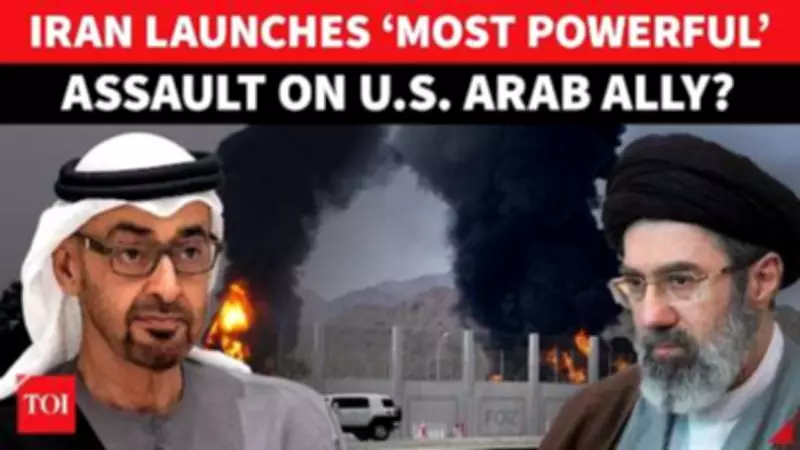
UAE Defenses Thwart Major Iranian Missile and Drone Assault
The United Arab Emirates confirmed on Saturday that its air defense systems successfully intercepted a significant missile and drone attack, which authorities have attributed to Iran. According to an official statement from the UAE Ministry of Defence, multiple ballistic missiles and eight unmanned aerial vehicles were neutralized in what is being described as one of the largest such strikes witnessed in the Gulf region.
Escalation Following Iranian Threats
This aggressive development comes just days after Iran issued explicit warnings that it could target locations within the UAE. Tehran has accused the United States of utilizing facilities in the Emirates to launch strikes on Iranian territory, framing this attack as a retaliatory measure. The incident marks a severe escalation in the ongoing geopolitical tensions between Iran and Gulf nations, with the UAE now bearing the brunt of Tehran's proclaimed revenge.
The scale of the attack underscores the heightened military capabilities and readiness of both nations. While UAE defenses managed to intercept the projectiles, the event has raised alarms about the potential for further conflict in the strategically vital region. Analysts note that such strikes could disrupt oil supplies and regional stability, impacting global markets.

Regional and International Implications
The attack has drawn immediate attention from international observers and neighboring countries. Gulf nations, including Saudi Arabia, are likely on high alert, as Iran's actions signal a willingness to extend hostilities beyond direct adversaries. The United States, which maintains a significant military presence in the UAE, is closely monitoring the situation, with potential implications for its Middle East policy and troop deployments.
This incident follows a series of provocative statements and actions from Iran, including threats against NATO territory and ongoing conflicts with Israel. The timing is particularly sensitive, given recent developments such as the US considering lifting oil sanctions under global pressure and diplomatic maneuvers involving China in the Hormuz crisis.
In response, the UAE has likely bolstered its defensive posture, emphasizing the importance of advanced air defense systems in modern warfare. The successful interception may serve as a testament to the Emirates' military investments, but it also highlights the persistent threat posed by Iran's missile and drone programs.
Looking Ahead: A Precarious Balance
As tensions simmer, the risk of miscalculation or further escalation remains high. Iran's leadership, including figures like Mojtaba, has vowed to avenge perceived aggressions, suggesting that this attack may not be an isolated event. The international community, including the United Nations, faces the challenge of mediating these conflicts to prevent a broader regional war.
For now, the UAE's ability to defend against this assault provides a temporary respite, but the underlying geopolitical rivalries continue to fuel instability. Observers warn that without diplomatic breakthroughs, the Gulf region could witness more frequent and severe confrontations, with global consequences for energy security and international relations.