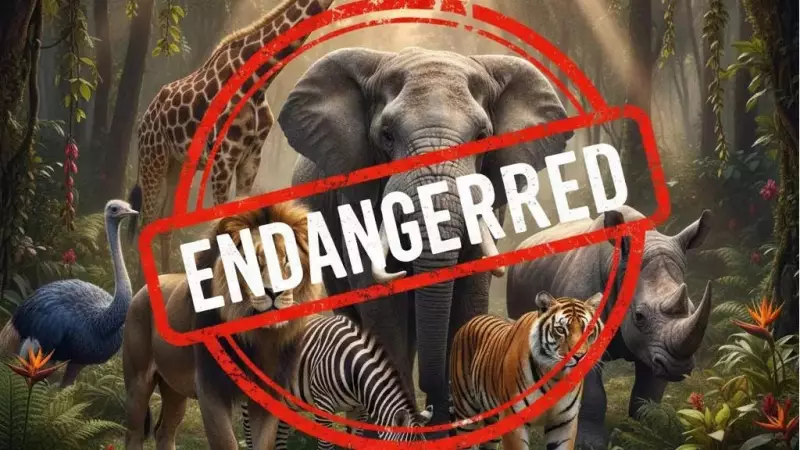
For more than two decades, the regulations controlling the movement of plants and animals across the United Arab Emirates' borders saw little revision. That era has now definitively ended. Starting in early 2026, the nation will operate under a completely revamped legal framework, marking a seismic shift in its approach to biodiversity protection and international trade compliance.
A Zero-Tolerance Overhaul for Wildlife Protection
The UAE government has officially retired its 22-year-old legislation, introducing in its place the comprehensive Federal Decree-Law No. 22 of 2025. This is not a minor update but a complete transformation of the rulebook. The law is strategically designed to create a high-risk environment for wildlife criminals while streamlining processes for legitimate businesses. Dr. Amna bint Abdullah Al Dahak, the Minister of Climate Change and Environment, has emphasized that this legislation embodies a "zero-tolerance" stance against illegal trade.
A core objective of the new decree is to bring the UAE into full alignment with the Convention on International Trade in Endangered Species of Wild Fauna and Flora (CITES). This global agreement ensures that international commerce does not endanger the survival of species in the wild. By integrating CITES into national law, the UAE mandates that every exotic plant and rare animal entering its territory is properly tracked, verified, and safeguarded.

Key Measures and Stricter Penalties
The updated law introduces several critical mechanisms to achieve its goals. It strictly regulates trade in endangered species, allowing it only with the correct documentation like health certificates and permits from recognized authorities. To prevent illegal cross-border movement, customs and port officials across air, sea, and land borders are empowered to enforce rigorous checks on species listed under international conventions like CITES.
Perhaps the most significant change lies in the dramatically enhanced consequences for violations. The law introduces severe penalties to act as a powerful deterrent:
- Prison Sentences: Individuals involved in serious illegal trading or possession can face imprisonment for terms extending up to 15 years.
- Substantial Fines: Financial penalties have been increased drastically, with maximum fines reaching a staggering AED 2 million in certain cases.
- Immediate Confiscation: Illegally traded specimens will be seized on the spot and transferred to specialized "Relief Centres" for care and potential repatriation.
Closing Legal Loopholes and Looking Ahead
The legislation also modernizes and clarifies the documentation required for legal trade. It provides precise definitions for instruments like "Falcon Passports" and "Phytosanitary Certificates." Importantly, these rules apply uniformly across the entire UAE, including all free zones such as the DIFC and ADGM. This universal application eliminates previous legal grey areas that traders might have exploited.
Looking forward, the UAE is moving beyond warnings to concrete action. The new law grants the Ministry of Climate Change and Environment (MOCCAE) and local customs authorities expanded executive powers for immediate seizure. Furthermore, by prioritizing "wildlife cybercrime" on the agenda for the 2026 UN Congress on Crime Prevention, the Emirates signals that its fight against trafficking extends to both physical and digital frontiers. The message is clear: the UAE's borders are closed to those profiting from the exploitation of the planet's precious biodiversity.