

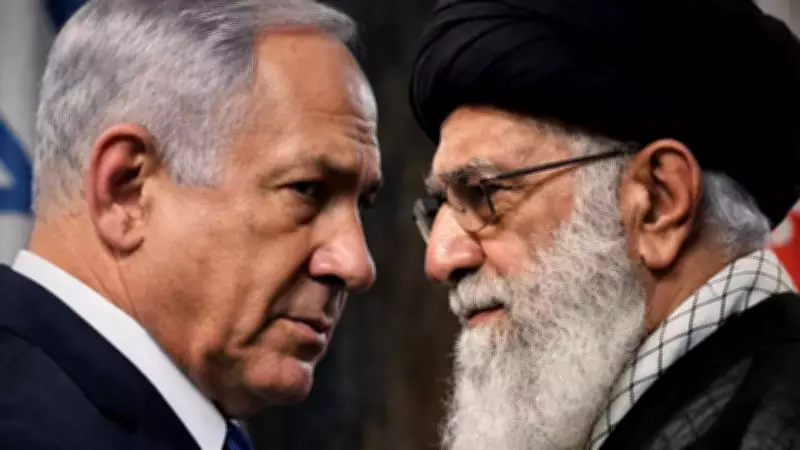
US-Israel Launch Preventive Strike on Iran; Tehran Retaliates Against US Bases
In a dramatic escalation of regional tensions, the United States and Israel launched a coordinated daylight "preventive attack" against Iran on Saturday. This aggressive move was swiftly met with retaliatory strikes from Iran, which targeted American military installations across the Middle East under an operation it named "Truthful Promise 4." The conflict marks a significant intensification in the longstanding geopolitical strife that has been simmering for months.
Immediate Aftermath and Retaliatory Actions
Following the joint US-Israel airstrikes on Tehran, Iran's Revolutionary Guard announced it had executed precise strikes against key US assets. The targeted locations included the headquarters of the US Fifth Fleet in Bahrain, military bases in Qatar and the United Arab Emirates, and various sites within Israel. Reports from the region indicated explosions were heard in cities such as Abu Dhabi and Doha, heightening fears of a broader regional conflagration.
The Iranian operation, dubbed Truthful Promise 4, represents a direct response to what Tehran perceives as unprovoked aggression. This retaliatory action underscores the volatile nature of the conflict, with both sides now engaged in open military confrontations that threaten to destabilize the entire Middle East.

Background and Diplomatic Stalemate
The recent strikes come amid a backdrop of stalled diplomatic efforts between Washington and Tehran. Negotiations over Iran's nuclear program, missile capabilities, and support for proxy networks have reached an impasse, with no agreement in sight. Both nations have exchanged repeated warnings, while military deployments and retaliatory threats have exacerbated tensions, raising alarms about the potential for a full-scale war.
In the weeks leading up to the attack, the US had significantly bolstered its military presence around Iran. This included the deployment of a large naval force, hundreds of fighter jets, refueling aircraft, and advanced anti-missile systems. These moves were widely interpreted as preparations for possible military action, signaling a shift from diplomacy to overt confrontation.
Historical Context: The June 2025 Conflict
The current hostilities are rooted in the conflict that erupted on June 13, 2025, when Israel initiated Operation Rising Lion. This operation involved strikes on Iranian nuclear facilities such as Natanz, Fordow, and Isfahan, as well as military bases, resulting in the assassination of several IRGC leaders and nuclear scientists. Iran responded with a barrage of ballistic missiles and drones aimed at Israeli cities, causing civilian casualties and widespread injuries.
The US entered the fray on June 22, 2025, bombing three nuclear sites in Iran. While these attacks reportedly delayed Iran's nuclear program, they did not completely destroy it. Following an Iranian strike on a US base in Qatar, President Donald Trump brokered a ceasefire on June 24, though accusations of violations persisted from both sides. Trump claimed the strikes had "obliterated" Iran's nuclear ambitions, but some US officials suggested the program was only set back by years.
Key Points of Contention
The core issues driving the conflict remain unresolved. Iran's nuclear program is a central point of dispute, with the US demanding a total ban on uranium enrichment, while Iran insists its activities are for peaceful purposes, despite evidence of enriching uranium up to 60 percent. Recent indirect talks in Geneva failed to make progress, as Washington pushed to include discussions on Iran's missile program and its support for proxy networks.
Ballistic missiles are another major concern for the US and Israel, who argue that Iran's arsenal poses a threat to the region, Europe, and US bases overseas. Tehran, however, refuses to negotiate on this front, asserting its right to self-defense. Additionally, the US and Israel have raised alarms over Iran-backed groups like Hezbollah, Hamas, the Houthis, and militias in Iraq, citing their attacks on US forces and threats to regional stability.
As the situation continues to evolve, the international community watches with apprehension, fearing that further escalations could lead to a protracted and devastating conflict in the Middle East.






