US Military Builds Up Forces Near Iran, Deploys Advanced Aircraft Carriers
In recent weeks, the United States military has significantly bolstered its forces in close proximity to Iran, a move that President Donald Trump has described as an "armada." This strategic buildup includes the deployment of the aircraft carrier Abraham Lincoln, which is accompanied by three warships equipped with Tomahawk missiles. Notably, these warships were previously utilized in strikes against two of Iran's nuclear facilities in June of last year.
Enhanced Naval and Air Capabilities
The warships in the armada are also armed with advanced air defense systems, providing robust protection against potential threats. The Abraham Lincoln carrier's stealthy F-35 fighters and F/A-18 attack planes are currently positioned well within striking distance of numerous targets across Iran, underscoring the operational readiness of US forces in the region.
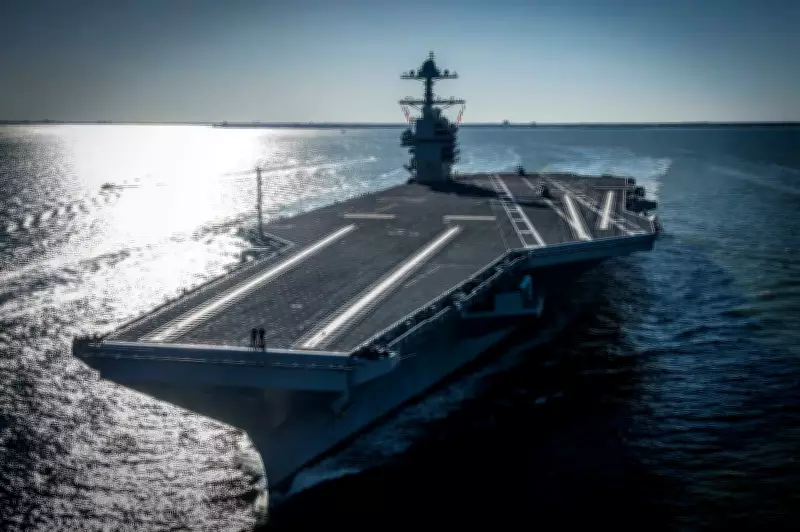
Furthermore, the US has recently ordered a second aircraft carrier strike group to the area. This group includes the navy's most advanced aircraft carrier, the USS Gerald R Ford, along with three accompanying destroyers. According to flight and ship-tracking data reviewed by The New York Times, these vessels were on course to the Strait of Gibraltar as of Wednesday, indicating a rapid mobilization.

Expanded Destroyer Presence and Air Base Operations
In addition to the carrier groups, US military officials have reported that another destroyer has been dispatched to the Northern Arabian Sea, with one more en route. This brings the total number of destroyers in the wider region to 13, significantly enhancing naval firepower and surveillance capabilities.
The Muwaffaq Salti Air Base in Jordan has emerged as a central hub for US assets during this buildup. Between mid-January and mid-February, at least two waves of attack aircraft arrived at the base, increasing the total number to nearly 30. These aircraft are poised to support potential operations against Iranian targets.
Electronic Warfare and Drone Deployments
Complementing the attack aircraft, four electronic warfare jets arrived in Jordan at the end of January. These specialized jets are designed to jam radar and communications systems, potentially disrupting enemy defenses in the event of conflict. A satellite image from January 30 revealed the presence of at least five MQ-9 Reaper drones at the base, adding to the US's unmanned aerial capabilities for reconnaissance and strikes.
Strengthened Air Defenses and Troop Numbers
The Pentagon has also dispatched additional Patriot and THAAD air defense systems to the region. These systems are crucial for protecting US troops from potential Iranian missile attacks, ensuring a layered defense strategy. Currently, there are an estimated 30,000 to 40,000 US troops stationed across the Middle East, reflecting a substantial military footprint aimed at deterring aggression and maintaining regional stability.
This comprehensive buildup highlights the escalating tensions between the US and Iran, with advanced military assets being positioned strategically to respond to any threats. The deployment of cutting-edge technology and increased troop numbers underscores the US commitment to safeguarding its interests and allies in the volatile Middle East region.