

US Initiates Naval Blockade with Frontline Carrier Deployment Near Strait of Hormuz
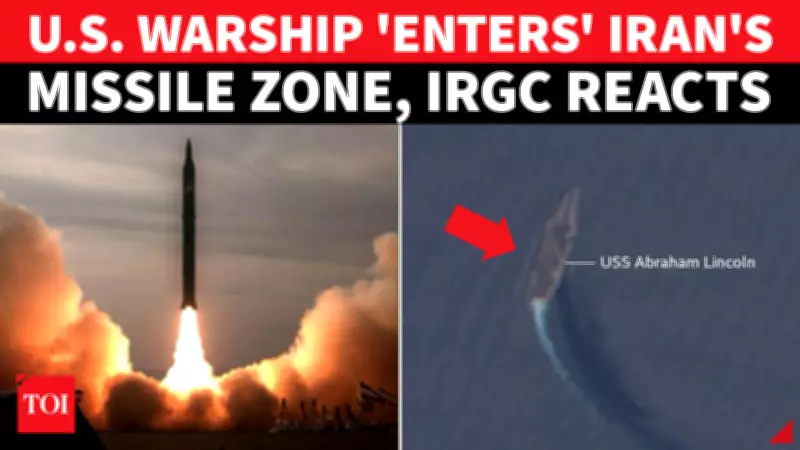
The United States has significantly expanded its military presence in a critical global maritime region, with confirmed satellite imagery revealing the frontline aircraft carrier USS Abraham Lincoln positioned in close proximity to Iranian territorial waters. This strategic deployment marks the beginning of an active naval blockade operation by US forces in the Gulf of Oman, just outside the entrance to the vital Strait of Hormuz.
Strategic Positioning and Operational Range
The USS Abraham Lincoln, one of America's most powerful naval assets, has been strategically positioned within operational range of key global shipping routes that pass through the Strait of Hormuz. This narrow chokepoint serves as a crucial artery for approximately one-fifth of the world's petroleum consumption, making it one of the most economically significant waterways on the planet.
This deployment represents a notable shift in United States naval strategy in the region. Rather than focusing on direct control of the narrow strait itself, American military planners have implemented a broader approach that establishes a comprehensive maritime buffer zone well before commercial vessels even approach the critical passageway.

Escalating Tensions and Iranian Response
The carrier deployment comes amid escalating regional tensions and coincides with planned maritime pressure measures specifically targeting Iranian-linked trade routes. Iranian officials have responded with sharp criticism, characterizing the American approach as a dangerous escalation that threatens global economic stability.
Iranian authorities have issued warnings that any disruption around the Strait of Hormuz could trigger far-reaching consequences extending well beyond the immediate region. They argue that targeting this crucial shipping corridor risks destabilizing international energy markets and global trade patterns that depend on the free flow of maritime traffic through these waters.
Broader Strategic Implications
The positioning of the USS Abraham Lincoln represents more than a simple show of force. It establishes a tangible American military presence capable of monitoring and potentially intercepting maritime traffic before it reaches the strategic bottleneck. This buffer zone strategy allows for earlier intervention capabilities while maintaining a physical distance from the most contested waters immediately adjacent to Iranian territory.
Military analysts note that this approach provides the United States with increased operational flexibility while potentially reducing immediate confrontation risks in the narrowest sections of the waterway. However, the proximity of a major American carrier battle group to Iranian waters inevitably increases the potential for miscalculation or accidental escalation between the two nations.
The naval blockade strategy unfolds against a backdrop of ongoing diplomatic tensions and represents the latest chapter in the complex relationship between Washington and Tehran regarding maritime security, energy transportation, and regional influence in the Persian Gulf area.






