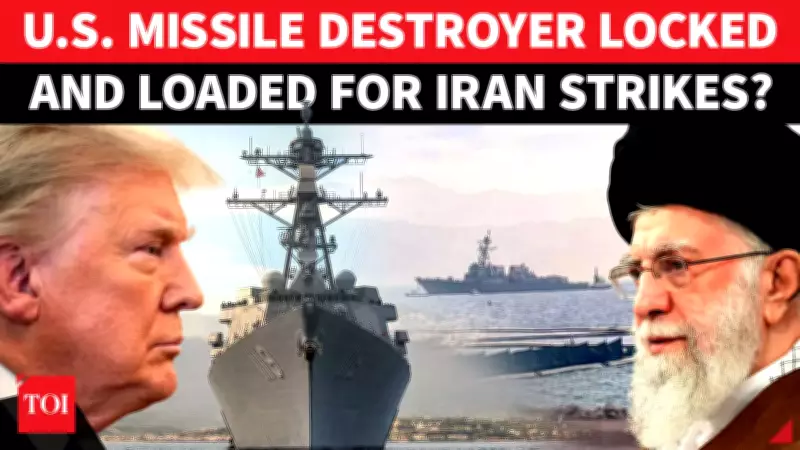
US Navy's Advanced Destroyer Makes Strategic Port Call in Israel
In a move laden with geopolitical significance, the USS Delbert D. Black, one of the United States Navy's most formidable guided-missile destroyers, has quietly docked at the Israeli port city of Eilat on the Red Sea. This deployment occurs against a backdrop of rapidly escalating tensions across the Middle East, particularly concerning Iran, and underscores Washington's commitment to bolstering its military footprint in the region.
A Symbolic Arrival Amid Rising Regional Strains
The arrival of the destroyer, while officially described as a pre-planned visit, carries profound strategic weight due to its timing. It coincides with a concerted US effort to enhance both defensive and offensive military capabilities in the area. Israeli security officials are reportedly closely monitoring these American deployments, reflecting growing apprehensions about a potential military escalation involving Iran.
The presence of such a high-tech warship in Eilat serves multiple purposes:

- It acts as a visible deterrent, signaling US readiness to protect its allies and interests.
- It enhances regional maritime security and intelligence-gathering operations.
- It facilitates closer military coordination between US and Israeli forces.
Understanding the Strategic Implications
The docking of the USS Delbert D. Black is not merely a routine naval visit. It represents a calculated step in a broader strategy to project power and ensure stability in a volatile region. As Iran continues to be a focal point of international concern, particularly regarding its nuclear ambitions and regional activities, the US is visibly reinforcing its assets.
This deployment allows for:
- Rapid response capabilities in the event of regional crises.
- Enhanced surveillance of critical maritime chokepoints like the Bab el-Mandeb Strait.
- Strengthened alliance assurances to key partners like Israel.
The region is watching this development closely, interpreting it as a clear message of resolve from the United States. The move underscores the intricate balance of power in the Middle East and highlights the ongoing strategic maneuvers that define this tense geopolitical landscape.