

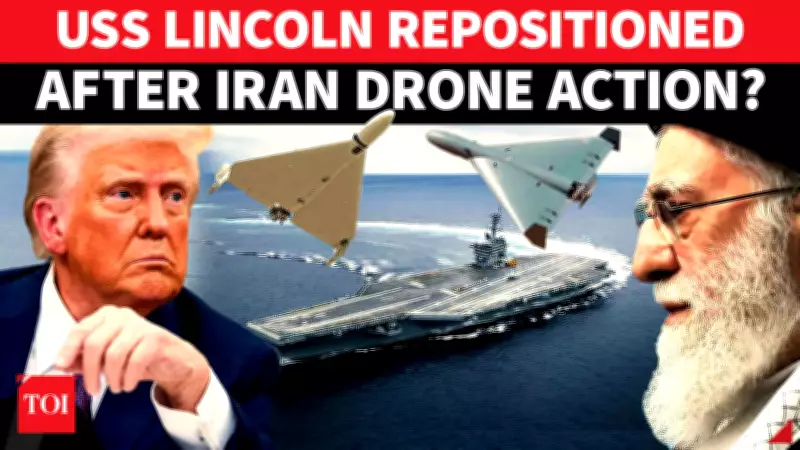
US Warship Abraham Lincoln Repositioned 1400 KM From Iran's Chabahar Amid Rising Tensions
The United States Navy has reportedly repositioned its Abraham Lincoln carrier strike group to a location near the Gulf of Aden, approximately 1400 kilometers away from Iran's strategic port of Chabahar. This significant military movement comes at a time of escalating tensions between Washington and Tehran, with both sides engaging in a delicate dance of diplomacy and military posturing.
Intense Scrutiny and Regional Implications
The repositioning of the USS Abraham Lincoln has drawn intense international scrutiny, particularly as Iran has issued stern warnings that any U.S. military actions could potentially trigger a broader regional conflict. Iranian officials have emphasized that such developments could lead to significant spikes in global oil prices, adding economic pressure to an already volatile geopolitical landscape.
Despite the heightened military alert levels, Iran has simultaneously signaled a conditional openness to diplomatic negotiations. This dual approach reflects the complex nature of current U.S.-Iran relations, where military preparedness coexists with ongoing diplomatic channels.

Secret Diplomatic Efforts Underway
Behind the scenes, secret diplomatic efforts involving multiple regional players are reportedly in progress. Turkey, various Gulf states, and senior U.S. envoys are said to be engaged in these confidential discussions aimed at de-escalating tensions. However, significant obstacles remain, primarily centered around longstanding disputes concerning:
- Iran's nuclear program and its future development
- Iran's missile capabilities and regional military activities
- The scope and conditions of potential sanctions relief
A Critical Turning Point for the Region
The current situation represents what many analysts describe as a critical turning point for Middle Eastern stability. With military forces on high alert across the region and diplomatic talks described as "hanging by a thread," the coming weeks could determine whether the current tensions escalate into open conflict or move toward resolution through negotiation.
The repositioning of the Abraham Lincoln carrier strike group serves as both a strategic military adjustment and a political signal, reflecting the Biden administration's approach to balancing pressure with diplomatic engagement in its Iran policy. As regional powers watch these developments closely, the international community remains concerned about potential spillover effects on global energy markets and regional security architectures.






