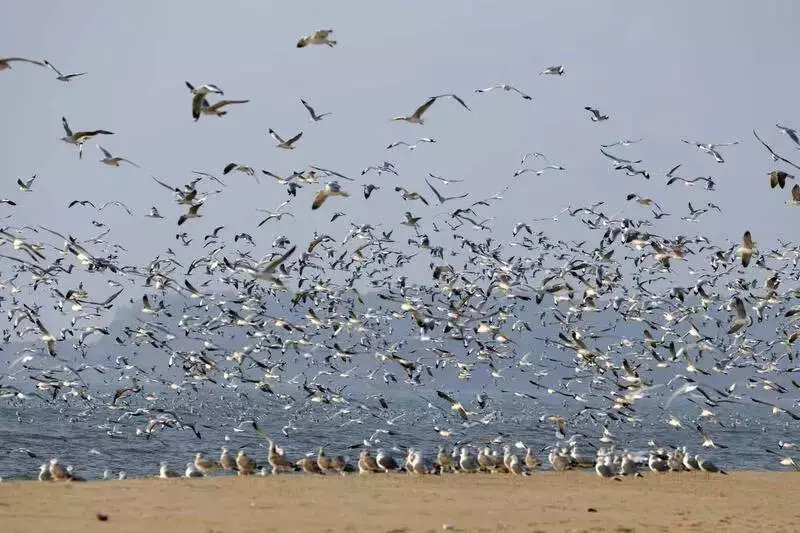
Uttara Kannada Coastline Experiences Significant Increase in Seabird Populations
The picturesque Uttara Kannada coastline in Karnataka is currently witnessing a remarkable ecological phenomenon this season, with bird enthusiasts and conservationists reporting a substantial 10-20% increase in the population of terns and gulls. This notable surge has captured the attention of the birding community across India, highlighting changing patterns in avian migration and coastal ecosystems.
Systematic Census Reveals Detailed Bird Data
According to Vignesh Bhat, a Bengaluru-based software engineer and experienced birder from Kumta, this population trend indicates exceptionally favorable coastal and migratory conditions for these seabird species. The observations were made during the recent wetland waterbird census conducted as part of the Asian Waterbird Census (AWC), an annual citizen science initiative that connects to the global International Waterbird Census program.
Held every winter season, the AWC mobilizes volunteers across Asia to systematically count waterbird populations in various wetland habitats. This comprehensive monitoring effort serves multiple purposes: tracking population trends over time, assessing the overall health of wetland ecosystems, and identifying crucial waterbird hotspots that require conservation attention. In India, this important program receives coordination from Wetlands International and the Bombay Natural History Society (BNHS), with collected data being uploaded to global platforms like eBird for scientific analysis and research.

Comprehensive Survey Uncovers Diverse Species
Bhat emphasized that although his team has participated in the AWC for several consecutive years, this year's exercise was conducted with far greater systematic rigor and coverage. Over an intensive two-day period, the dedicated survey team managed to examine nearly 50–60% of all wetlands within Uttara Kannada district, recording an impressive total of 195 distinct bird species across various habitats.
Among the most striking findings was the clearly noticeable increase in gull and tern populations throughout the region. "Traditionally, areas around Kundapur have reported good numbers of these seabird species. This time, however, we observed significant populations extending into Uttara Kannada as well," Bhat explained. The recorded species included the Brown-headed Gull, Black-headed Gull, Lesser Black-backed Gull, Slender-billed Gull, Gull-billed Tern, Sandwich Tern, and both Greater Crested and Lesser Crested Terns, demonstrating remarkable biodiversity in the coastal ecosystem.
Climate Change and Habitat Exploration Factors
While the precise reasons behind this population shift remain under investigation, Bhat suggested that climate change could be serving as a contributing factor to these changing bird distribution patterns. "We are witnessing several unusual bird records across Karnataka state, not just limited to this particular coastal region," he noted, indicating broader ecological changes affecting avian populations.
The birder also recalled that before the Covid-19 pandemic disrupted normal activities, many potential birding hotspots in Uttara Kannada remained relatively unexplored and undocumented. During the lockdown period, Bhat collaborated with fellow birder Shwetha Bharati to identify, explore, and systematically map several such promising locations throughout the district.
"Uttara Kannada district possesses an incredibly diverse range of natural habitats — from unique laterite plateaus and forest patches to extensive wetlands, river systems, and pristine beaches. This ecological diversity naturally supports a wide variety of birdlife," Bhat elaborated, highlighting the region's untapped ornithological potential.
Rising Awareness and Conservation Importance
Through their persistent documentation efforts and information sharing within the birding community, Bhat's team has significantly contributed to raising awareness about Uttara Kannada's rich avian diversity. The district is now gradually emerging as an important destination for both amateur birdwatchers and professional conservationists alike, offering unique opportunities to observe diverse species in varied natural settings.

This increased attention not only promotes ecological tourism but also strengthens conservation initiatives aimed at protecting these vital coastal habitats for future generations of both birds and humans. The systematic data collection through programs like the Asian Waterbird Census continues to provide valuable insights into how climate patterns, habitat changes, and human activities influence migratory bird populations along India's western coastline.