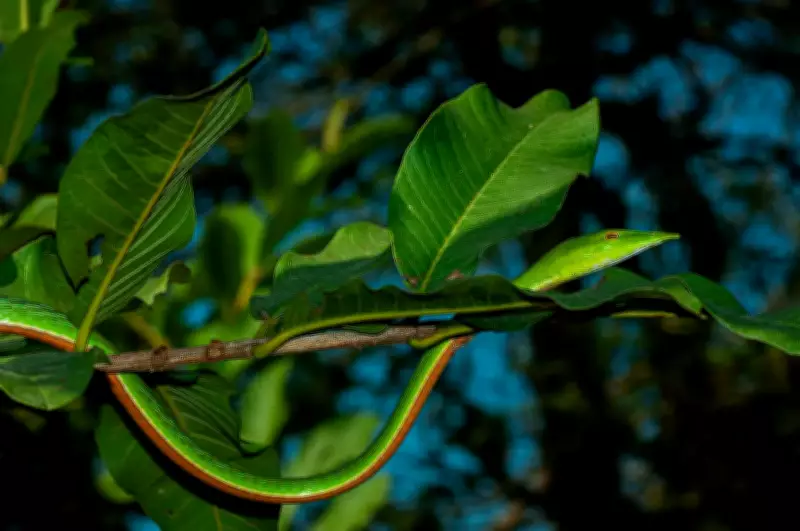
Valmiki Tiger Reserve Transforms into Snake Biodiversity Epicenter
Bihar's solitary tiger sanctuary, the Valmiki Tiger Reserve (VTR) located in West Champaran district, has astonishingly evolved into a premier center for snake biodiversity. Comprehensive documentation reveals an impressive tally of 43 distinct snake species inhabiting the reserve, with five of these species representing exclusive discoveries made within the past decade that remain unrecorded in any other part of Bihar.
Exclusive Species and Global Significance
Wildlife authority Abhishek, who has collaborated with WWF-TRAFFIC India, provided crucial context. While approximately 3,500 snake species exist globally and India hosts around 363 documented species, Bihar's entire recorded snake diversity stands at just 43 species, with the majority concentrated within the Valmiki forest landscape.
"In recent years, coordinated efforts between the Wildlife Institute of India and the forest department have led to the identification of five entirely new snake species within VTR," Abhishek explained. "These remarkable discoveries include the Copper Head Trinket (locally called Vansundari), Twin-Spotted Wolf Snake, Dromelis Black-Headed Snake, Mock Viper, and the mildly venomous Salazar Pit Viper. Significantly, none of these species have been documented in any other district across Bihar."

He further highlighted that the most recent breakthrough from the area involves the Long-Snout Vine Snake, which has been officially documented as a new species discovery not just for India but for the entire world. The reserve has additionally reported sightings of the ecologically significant Burmese python, marking another important addition to Bihar's wildlife records.
Venomous Species and Ecological Dynamics
According to global estimates, approximately 600 snake species worldwide possess venomous characteristics. However, the Valmiki forest ecosystem hosts only a limited number of venomous varieties. Among India's notorious "Big Four" dangerous snakes—the Spectacled Cobra, Common Krait, Russell's Viper, and Saw-Scaled Viper—three species are confirmed residents of VTR. The Saw-Scaled Viper does not occur within Bihar's boundaries, according to expert analysis.
Abhishek elaborated on snake behavior: "Most snakes are nocturnal creatures that utilize their specialized tongues to detect chemical signals in their environment. As ectothermic animals, they depend entirely on external heat sources to regulate their body temperature. During periods of extreme cold or intense heat, snakes actively migrate in search of suitable thermal conditions, which occasionally brings them into proximity with human settlements."
Conservation Efforts and Ecological Importance
West Champaran Forest Conservator and Director Neshamani K emphasized the critical ecological role snakes perform. "Snakes serve as indispensable components in maintaining ecological equilibrium by controlling rodent populations and supporting natural food chains. Their sustained presence serves as a reliable indicator of a healthy, thriving forest ecosystem," he stated.
Neshamani attributed the increasing documentation of snake species to enhanced wildlife monitoring protocols, systematic scientific surveys, and productive collaboration between forest departments and research institutions. Concurrent awareness campaigns are being conducted in fringe villages to mitigate fear, prevent unnecessary snake killings, and promote safe coexistence between human communities and wildlife.
"VTR represents far more than just a sanctuary for large feline predators. Its growing importance as a vital habitat for lesser-known species, particularly reptiles and amphibians, carries equal ecological significance," Neshamani concluded, highlighting the reserve's expanding conservation profile beyond its traditional tiger-focused identity.