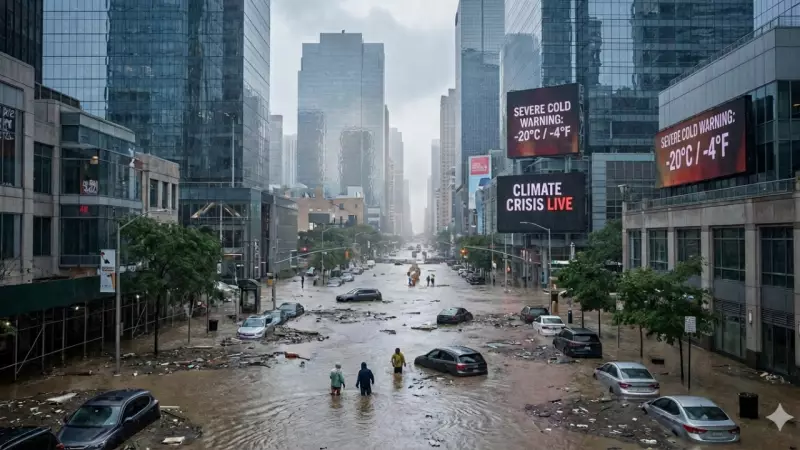
The festive cheer of a mild Christmas in Delhi, with an average temperature of 14°C, was abruptly shattered by a harsh cold wave. The capital witnessed its coldest New Year's Eve in five years, ushering in 2026 under a blanket of dense, toxic fog. This erratic swing is not an isolated anomaly but a stark symptom of a larger, alarming trend: the predictable rhythm of India's seasons is breaking down.
The Fading Calendar: Why Seasons Are Crumbling
For generations, human life and agriculture have been synchronized with the reliable cadence of winter, spring, summer, and autumn. Today, that natural timetable is failing. "February feels like April," is a common refrain among meteorologists, highlighting a profound shift. Dr. Milap Punia, a Geography professor at Jawaharlal Nehru University (JNU), describes seasonality as nature's traffic signal system. When it functions, ecosystems and societies thrive in order. When it fails, widespread disruption ensues.
Traditional seasons are shrinking, shifting, or vanishing. In Kashmir, the crucial spring rainy season known as 'sonth' has largely disappeared. The Indian summer monsoon is reorganizing, with rainfall intensifying over western India while the fertile Indo-Gangetic Plain and northeast grow drier. This shift is driven by the warming Indian Ocean, which redirects moisture-laden winds. Biological cues are also misfiring; Himalayan raspberries now ripen up to two months earlier, and farmers find traditional insect indicators no longer match planting cycles.

A New Normal of Extremes and Cascading Risks
Climate change is amplifying extremes, making weather dangerously unpredictable. In 2025, 99% of days from January to September experienced extreme weather in India, with about 60% of districts facing high heatwave risk. Dr. Seema Mehra Parihar, a Geography professor at Delhi University's Kirori Mal College, warns that seasons are losing distinctness, shifting suddenly and leaving little time for adjustment.
The impacts are severe and multifaceted:
- Agriculture Under Threat: Cropping calendars are in disarray. Erratic monsoon rains increase crop loss risk, while warmer winters cause earlier harvesting of Rabi crops. Farmers are forced to adapt with more irrigation and inputs, raising costs and vulnerability.
- Water Security in Peril: In semi-arid regions like Rajasthan, changing seasonality and over-extraction are causing rapid groundwater depletion. Extreme heat in March, now more frequent, further spikes irrigation demand, threatening long-term agricultural sustainability.
- Health and Ecosystems at Risk: Longer heatwaves increase heat-related illnesses and disrupt disease cycles. Biodiversity suffers as plant and animal life cycles fall out of sync with food availability.
- Cultural Erosion: Festivals and rituals tied to seasonal markers are losing their contextual foundation, threatening cultural heritage.
The Science and the Stakes: A Planetary Emergency
The core driver is global warming, fueled by greenhouse gas emissions. Rising temperatures are disturbing Earth's heat balance, causing summers to arrive earlier and last longer, while winters shrink. In the Indian context, a warming Indian Ocean is critically altering monsoon dynamics.
Dr. Parihar emphasizes that this is not a distant future threat but an ongoing crisis. 2024 was one of India's warmest years on record, and by 2050, average temperatures could rise another 1.2-1.3°C. Dr. Punia offers a grim analogy: "It is like a ship that has already struck an iceberg... the window for preventing catastrophic failure is rapidly closing."
Looking ahead, models project that without drastic emission cuts, summers could stretch to nearly six months by century's end, with winters dramatically shortened. The once-comforting predictability of the seasons is being replaced by a stark reality of climatic uncertainty, demanding urgent adaptation and mitigation to safeguard India's future.