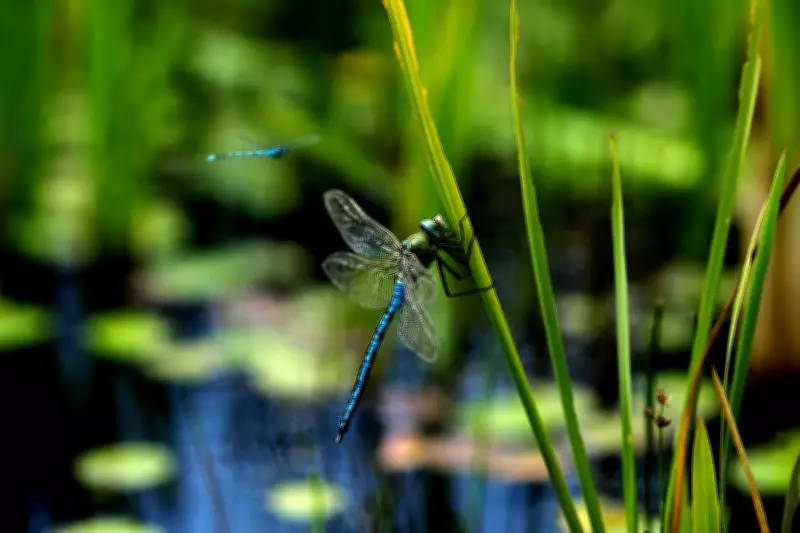
Retired IAS officer Avay Shukla observes that he has not seen any dragonflies this year on his half-acre plot in Purani Koti village, Shimla, and fears their niche has disappeared forever. He argues that biodiversity, often overlooked in policymaking, is the building block of nature and essential for a habitable planet.
The Vanishing Buzz of Purani Koti
In 2002, when Shukla acquired the land, the area had only two houses, rolling grassy hillsides, and a carpet of wild daisies, buttercups, lilies, and primroses. The place buzzed with bees, butterflies, cicadas, and dragonflies. Birds, feral cats, and pine martins formed higher trophic levels. Today, most land has been built over, trees felled, and the buzzing replaced by jackhammers and saws. Despite planting over 200 fruit and jungle trees, the lowest tier of natural growth—grasses, bushes, ferns, wild flowers, and creepers—has disappeared, along with the soil's ability to retain moisture. Insects dependent on this base are vanishing. Shukla notes that very few butterflies and bees remain, and dragonflies are gone entirely. He predicts that within a year or two, bees and butterflies will also abandon this biodiverse wasteland, explaining why fruits like apples, pears, apricots, and cherries can no longer be grown due to lack of pollinators.
Ignored Value of Biodiversity in Development
Shukla criticizes India's planning and developmental processes for rarely factoring in biodiversity loss. Only forest or green cover—the number of trees felled—is reluctantly considered, quantified, and compensated through compensatory afforestation. Biodiversity loss is completely ignored. Himachal's forest area is 37,000 sq km (37 lakh hectares), and a 2024 study by the Bhopal Institute of Forest Management quantifies its biodiversity value at Rs 33,000 crore per annum, or Rs 89,000 per hectare per year. Over a typical 25-30 year project lifecycle, the state should charge at least Rs 30 lakh per hectare of forest diverted for non-forest use, but this is not done because no value is attached to biodiversity.

Global Legal Precedents for Ecosystem Rights
Shukla highlights global changes. Peru became the first country to give legal protection to insects, specifically its stingless bees, recognizing their right to exist, a clean habitat, to regenerate, and to legal representation if threatened by pollution, deforestation, or projects. Anyone threatening these rights can be sued. In Wales, the river Wye received legal protection under a “rights of nature” charter recognizing its intrinsic right to exist, flow, biodiversity, freedom from pollution, regeneration, and a healthy catchment. Citizens can enforce these rights in court. New Zealand granted legal status to the Whanganui River and legal guardianship to Mount Taranaki through an eight-member Guardian Council. In India, the Uttarakhand High Court in 2017 recognized the Ganga as a living entity with legal rights, but the Supreme Court stayed the ruling, leaving the matter in limbo.
A Call for Ecological Awakening
Shukla urges Indian governments, courts, and the National Green Tribunal to learn from these developments, dispel their omniscience, and rouse themselves from sloth and lack of ecological understanding. Only then might dragonflies return to Purani Koti and reclaim what is rightfully theirs.