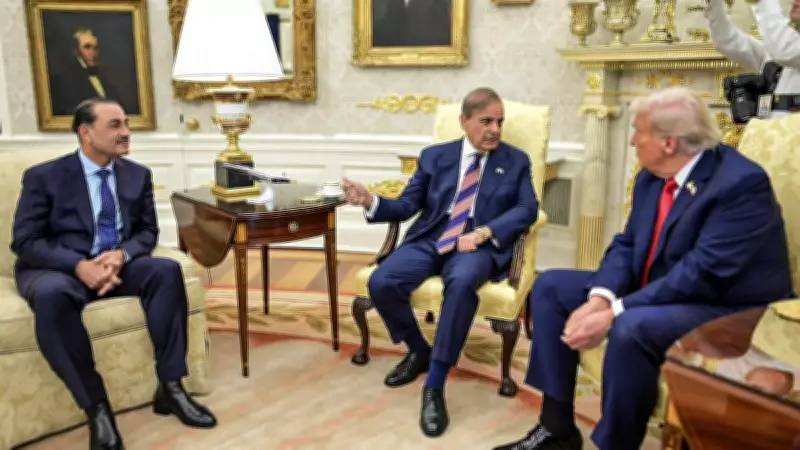
US President Donald Trump has outflanked India's concerted bid to isolate Pakistan on the global stage, handing Islamabad a crucial diplomatic lifeline. The move, analysts say, not only undermines years of Indian diplomatic efforts but also raises fresh questions about the durability of US support for Pakistan given Trump's mercurial foreign policy approach.
Trump's Surprise Move
In a statement released by the White House on 20 June 2026, Trump announced a resumption of high-level dialogues with Pakistan, including military cooperation and economic aid, which had been largely suspended under the previous administration. The decision came as a shock to New Delhi, which had been leading a campaign to isolate Pakistan over its alleged support for cross-border terrorism.
According to a senior US official who spoke on condition of anonymity, Trump's decision was driven by a desire to secure Pakistan's help in facilitating peace talks with the Taliban in Afghanistan. "The President believes that Pakistan can play a constructive role in ending the war in Afghanistan, and he is willing to give them another chance," the official said.

India's Reaction
India's Ministry of External Affairs expressed "deep disappointment" over the US decision. In a carefully worded statement, the ministry said that any engagement with Pakistan must be conditioned on concrete action against terrorist groups operating from its soil. "India has consistently provided evidence of Pakistan's involvement in cross-border terrorism. We hope the US will not compromise on this fundamental issue," the statement read.
Former Indian diplomat Ambassador Rajiv Dogra commented, "This is a major setback for India's diplomatic strategy. We had successfully isolated Pakistan in many international forums, but Trump's move has given them a new lease on life. It remains to be seen how long this lifeline will last."
Pakistan's Response
Pakistan's Prime Minister welcomed the US overture, calling it a "positive step towards regional peace and stability." In a press conference in Islamabad, he reiterated Pakistan's commitment to combating terrorism and expressed hope that the renewed partnership would benefit both nations.
However, analysts warn that Trump's support may be conditional and short-lived. Dr. Ayesha Siddiqa, a Pakistani security analyst, said, "Trump is transactional. He will support Pakistan only as long as it serves his immediate interests, especially regarding Afghanistan. The moment Pakistan fails to deliver, the lifeline could be withdrawn."
Implications for South Asia
The US shift has significant implications for the balance of power in South Asia. India, which had been counting on US support to pressure Pakistan, now faces a more challenging diplomatic environment. Meanwhile, Pakistan may feel emboldened to adopt a more assertive posture on issues such as Kashmir.
China, a close ally of Pakistan, has welcomed the US move. The Chinese Foreign Ministry said it hoped the development would contribute to peace and stability in the region. Russia, on the other hand, expressed concern, warning that any unilateral action could undermine multilateral efforts to combat terrorism.
What Lies Ahead
Trump's decision is likely to be a topic of intense debate in the coming weeks, both in Washington and among US allies. Critics argue that it rewards Pakistani behavior that has long been condemned by the international community. Supporters counter that engagement is necessary to achieve US goals in Afghanistan.
For India, the challenge is to recalibrate its strategy. New Delhi may seek to strengthen ties with other major powers, including Russia and the European Union, to counterbalance the US shift. Additionally, India could intensify its own bilateral engagement with Afghanistan and Central Asian states to maintain pressure on Pakistan.
As the situation evolves, one thing is clear: Trump's diplomatic lifeline to Pakistan is a double-edged sword. It offers Islamabad a chance to reintegrate into the international community, but it also comes with high expectations and potential pitfalls. Whether Pakistan can seize this opportunity or squander it remains to be seen.