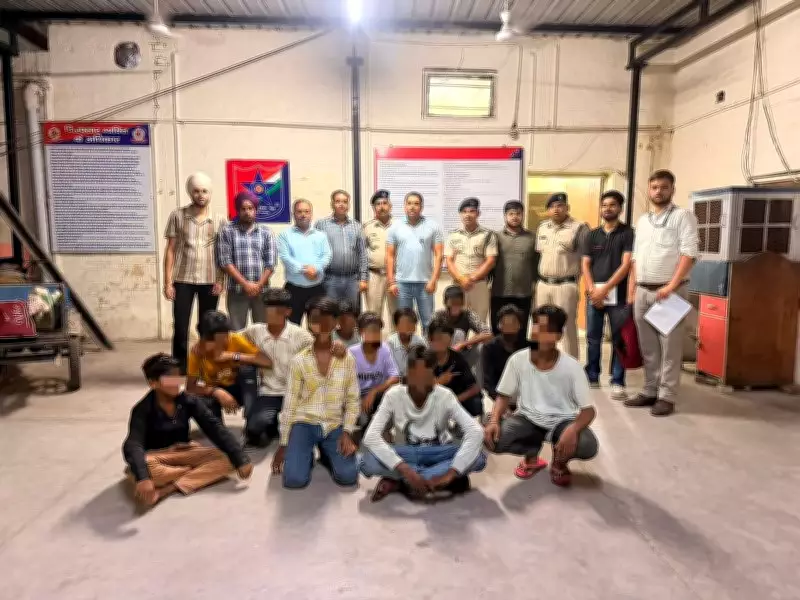
A joint operation by the Railway Protection Force (RPF), Anti-Human Trafficking Unit (AHTU), and Zila Yuva Vikas Sangathan led to the rescue of 18 children from two trains at Ambala Cantonment Railway Station on Wednesday and Thursday. The children, aged between 10 and 16, were being transported to various locations in Punjab for forced labour, according to officials.
Details of the Rescue Operation
Acting on credible intelligence, the authorities conducted two coordinated raids. On Wednesday night, 12 children were rescued from the Jan Nayak Express. The following day, six more children were rescued from the Karmabhoomi Express. The children were found travelling without proper documentation and were accompanied by suspected traffickers, who managed to escape during the operation.
Preliminary investigations revealed that the children hailed from Bihar, Uttar Pradesh, and West Bengal. They were being taken to work in Ludhiana and other parts of Punjab under exploitative conditions.

Children's Testimonies and Working Conditions
Ajay Tiwari, programme coordinator of Zila Yuva Vikas Sangathan, said, "During the initial interaction, the children stated they were being taken to various locations in Punjab for labour. Three children were destined for Ludhiana to work under a painting contractor, where they were expected to perform painting and other labour work for nearly Rs 5,000 per month."
Two other children were to be employed at a jacket manufacturing unit in Ludhiana, while three children were told they would work in an orchard. The remaining children were to be sent to other unspecified locations for labour. All children were promised wages but were unaware of the exploitative nature of the work.
Legal and Rehabilitation Measures
After completing the Daily Diary Report (DDR), all rescued children were produced before the Child Welfare Committee (CWC) in Ambala. The CWC ordered their placement at the Open Shelter Home in Ambala Cantonment for care and protection. The children are currently being counselled, and efforts are underway to trace and contact their families.
Paramjit Singh Badola, President of Zila Yuva Vikas Sangathan, emphasized the scale of the problem: "Thousands of children across the country become victims of child trafficking and exploitation every year. Contractors lure economically vulnerable families with promises of employment and better wages for their minor children, and take them from one state to another. Railway routes are increasingly being used as a major means of child trafficking."
Call for Collective Action
Badola further stated that timely information and effective coordination among departments can help protect children from trafficking and labour exploitation. He urged the administration, social organizations, and the general public to share the collective responsibility of ensuring child safety. The rescued children are being provided with psychological support, and efforts are being made to reunite them with their families.
This operation highlights the persistent challenge of child labour in Punjab, despite regular inspections and rescue operations. Authorities have registered cases under the Juvenile Justice (Care and Protection of Children) Act and the Child Labour (Prohibition and Regulation) Act against the unidentified traffickers.