

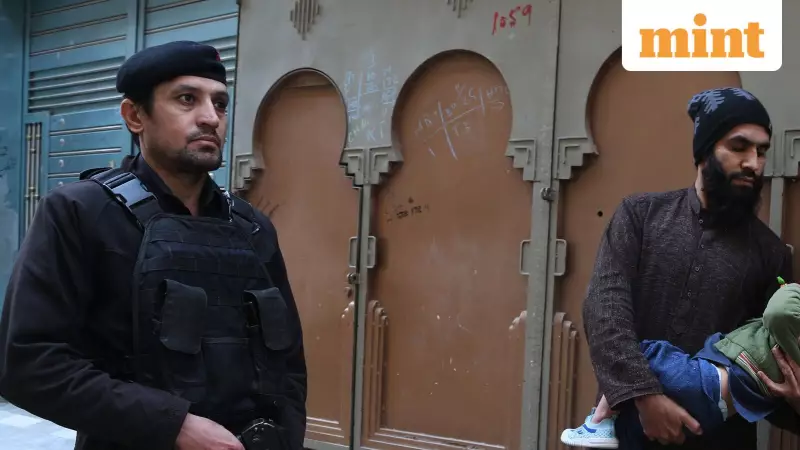
In a significant escalation of violence, five Pakistani police personnel were killed on Tuesday in a brazen ambush in the country's northwest. The attack, involving an explosive device and gunfire, highlights a worrying surge in militant activity across multiple provinces, with separatist and Islamist groups claiming separate assaults on security forces.
Details of the Khyber Pakhtunkhwa Police Ambush
According to provincial police officials, the incident occurred in the Karak district of Khyber Pakhtunkhwa. The officers were travelling in a van when an improvised explosive device (IED) struck their vehicle first. Following the blast, attackers opened fire on the damaged van.
The combined assault resulted in the deaths of four police officers and their driver. No militant organization immediately claimed responsibility for this specific attack. Security agencies find the incident particularly alarming as the Karak district has seen relatively little major militant violence in recent years.

Leadership Response and Broader Security Context
Pakistan's Prime Minister, Shehbaz Sharif This violence occurs against a backdrop of deteriorating relations between Pakistan and neighbouring Afghanistan. Islamabad has accused militant groups operating from Afghan territory of being behind the resurgence of attacks. The Taliban-led government in Kabul has rejected these accusations, maintaining that Pakistan's security challenges are an internal matter. The mountainous border regions have long been a haven for groups like the Tehreek-e-Taliban Pakistan (TTP), which has waged a nearly two-decade-long insurgency against the state. Separately, a series of coordinated attacks targeted Pakistani security forces in the restive province of Balochistan. The Baloch Liberation Army (BLA) claimed its fighters killed six Pakistani soldiers in three separate assaults. As per a statement from BLA spokesman Jeeyand Baloch, the first attack was a remote-controlled IED strike in the Daghari area near Quetta on Tuesday, killing four soldiers and injuring two others. A second assault targeted troops in the Kalamuddin area of Kachhi district using automatic weapons and rockets. The group claimed a third attack in the Kech district late Friday night, using rockets and automatic weapons against an army post, killing two soldiers. Another separatist group, the Balochistan Liberation Front (BLF), also claimed responsibility for four attacks between December 18 and 20 in the Nushki, Tump, and Dasht areas. BLF spokesman Major Gwahram Baloch stated their fighters targeted a security forces vehicle with an IED in Nushki, killing three personnel. They also claimed to have shot down a quadcopter drone and attacked a military camp in Tump, and destroyed equipment at a mobile tower in Dasht alleged to be used for surveillance. The wave of claimed attacks was not confined to Balochistan. The Baloch Republican Guards (BRG) claimed an assault on a police station in the Bhit Shah area of Hyderabad district in Sindh province. BRG spokesman Dostain Baloch said fighters hurled a hand grenade at the station, causing "human and material losses." The group vowed to continue operations until achieving "the freedom of Balochistan." The simultaneous claims of attacks across three provinces—Khyber Pakhtunkhwa, Balochistan, and Sindh—point to a complex and challenging security landscape for Pakistan, involving both Islamist and ethno-nationalist militant groups.Wave of Coordinated Attacks in Balochistan
Violence Extends to Sindh Province






