

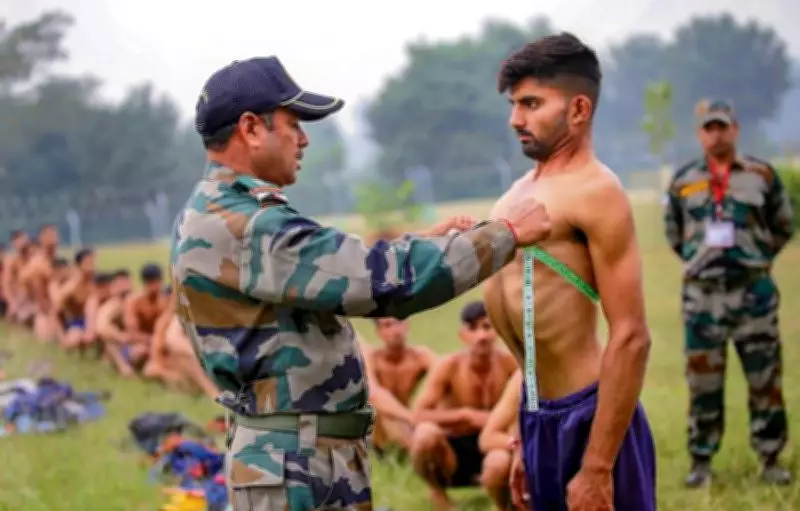
The Agnipath scheme, India's ambitious new military recruitment model, has sparked a debate about its potential impact on unit cohesion and overall military effectiveness. While the government touts it as a transformative reform to modernize the armed forces, critics argue that the short-term service model could undermine the camaraderie and experience essential for a cohesive fighting force.
Understanding the Agnipath Scheme
Announced in June 2022, the Agnipath scheme recruits soldiers, known as 'Agniveers,' for a four-year tenure, with only 25% retained for regular service. The aim is to reduce the pension burden and create a younger, more tech-savvy military. However, this radical departure from the traditional long-term career model has raised eyebrows among defense experts.
Potential Risks to Unit Cohesion
Military cohesion, built over years of shared experiences and trust, is critical for combat effectiveness. The Agnipath scheme's rapid turnover of personnel could disrupt this bond. A study by the Centre for Land Warfare Studies (CLAWS) suggests that frequent rotation of troops may hinder the development of unit identity and esprit de corps. Additionally, the departure of experienced soldiers after four years could leave a knowledge vacuum, affecting operational readiness.

Another concern is the impact on leadership development. Traditional military structures rely on experienced non-commissioned officers (NCOs) who guide junior soldiers. Under the Agnipath model, the pipeline for such leadership is significantly shortened, potentially weakening the chain of command.
Counterarguments and Mitigation Measures
Proponents of the scheme argue that modern warfare demands adaptability and technological proficiency, which a younger force can provide. They also point to the retention of 25% of Agniveers, who will form a core of experienced soldiers. The government has introduced measures such as specialized training and incentives to ensure that retained personnel are well-prepared for leadership roles.
Moreover, the scheme includes provisions for Agniveers to gain skills that are transferable to civilian careers, addressing concerns about post-service employment. This could attract motivated individuals who might not have considered a military career otherwise.
Comparative Analysis with Other Nations
Several countries have experimented with short-term service models. For instance, the Israeli Defense Forces (IDF) have a mandatory service period, but with a different structure. The US military uses a mix of short-term and career soldiers, but with a strong emphasis on retention. India's approach is unique in its scale and the abrupt shift from a career model.
Experts suggest that the success of the Agnipath scheme will depend on rigorous training, effective retention strategies, and continuous assessment. The military must also adapt its tactics and culture to accommodate the new structure.
Conclusion
The Agnipath scheme represents a bold reform with potential benefits, but it also carries inherent risks to military cohesion. As India implements this model, it must carefully monitor its impact and be prepared to make adjustments. The ultimate test will be in the field, where the bonds of trust and experience are paramount.






