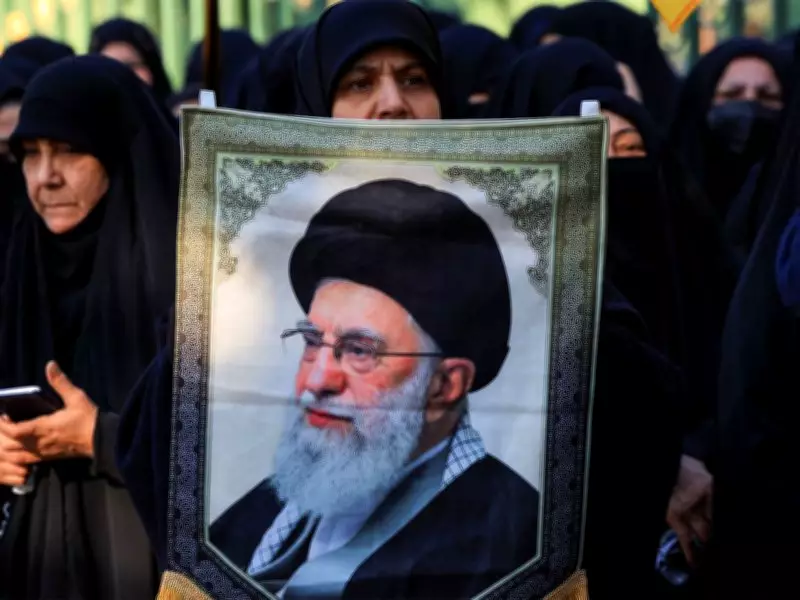
Iranian state media reported that the coffin carrying the body of former Supreme Leader Ayatollah Ali Khamenei was taken to the site where he was killed, in an unannounced event. According to the Islamic Republic of Iran Broadcasting (IRIB), the coffin was brought to the location of his martyrdom.
Massive Funeral Expected
The multi-day public farewell, scheduled for July 4 and 5 in Tehran, is anticipated to draw a record-breaking crowd of up to 20 million participants, according to the Islamic Revolutionary Guard Corps (IRGC). Brigadier General Hassan Hassanzadeh, commander of the IRGC's Tehran Command, said preliminary estimates project between 12 million and 15 million participants, with some assessments suggesting turnout could reach 20 million.
Hassanzadeh stated that authorities decided against using a single procession route after technical assessments concluded that no individual street in Tehran could safely accommodate the anticipated turnout. Instead, the procession will move along a broader corridor across the capital, with vehicle access restricted within the ceremony zone.

International Condolences
UN Secretary-General Antonio Guterres spoke by phone with Iranian Foreign Minister Abbas Araghchi to convey condolences over the martyrdom of Khamenei, according to the Government of Iran. In a post on X, the government said the call also discussed regional and international developments, the Strait of Hormuz, the Lebanon ceasefire, and ongoing talks.
Iran's embassy in Ghana shared a tribute recalling a 2016 meeting between then-Ghanaian President John Dramani Mahama and Khamenei in Tehran. The embassy posted on X: "He didn't talk about oil deals or trade memorandums. He talked about what was happening to Africa." The embassy said Khamenei argued that "the extremism isn't homegrown. It has sponsors, and those sponsors come from Western countries and the Zionist regime," and believed "the answer isn't more dependency on the same people. It's independent countries turning to each other."
India Sends Representatives
The Ministry of External Affairs (MEA) announced that Bihar Governor Lt. Gen. (Rtd.) Syed Ata Hasnain and Minister of State for External Affairs Pabitra Margherita will visit Iran on July 3 to attend the funeral ceremony. Meanwhile, Iran's new Supreme Leader Mojtaba Khamenei will not attend the funeral ceremonies for his father due to security concerns, according to the current leader's representative in India, Ayatollah Hakim Elahi. Elahi attributed the decision to Israeli threats and surveillance risks.
Funeral Arrangements
The public farewell ceremony will begin at 6 am local time on July 4 at Tehran's Imam Khomeini Grand Prayer Grounds, continuing until 8 pm. Funeral prayers are scheduled for the morning of July 5. Hassanzadeh said two main ceremonies have been planned: the public farewell and funeral prayers at the Prayer Grounds, and a funeral procession at a separate location. The platform for the leader's body has been positioned at an elevated location to ensure visibility.
Authorities have mobilised executive agencies, municipal authorities, healthcare providers, military and law enforcement organisations, cultural institutions, and public service bodies. Tehran's metro network and municipal bus fleet will operate at full capacity, with multiple traffic-control zones established. Five dedicated service centres will offer drinking water, meals, medical assistance, sanitation facilities, prayer areas, and other welfare services.
Ali Khamenei was killed in US-Israeli strikes on February 28, leading to widespread conflict in the West Asia region. Following his death, his son Mojtaba Khamenei was appointed as the new Supreme Leader.