

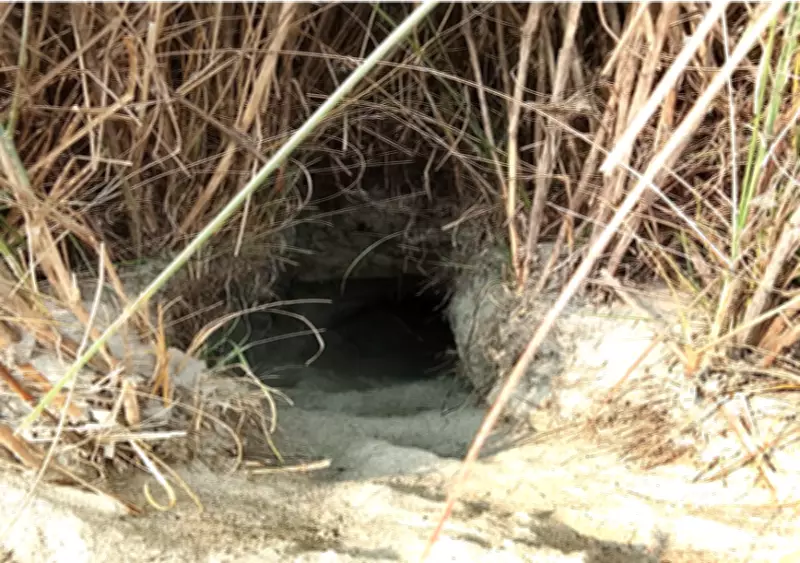
A year after wolf attacks turned parts of Bahraich into fear zones, killing 14 people and critically injuring 30, most of them children, the district has reported no human-wolf conflict so far this season. Forest officials credit a conservation-led response that protected dens in the Ghaghara river catchment and stopped activities they said had pushed wolves towards villages.
Bahraich Model: Conservation Over Cage-Based Response
Officials said the Bahraich model showed that conflict reduction required more than cages, patrol teams and rescue response after attacks. It needed protection of denning sites, control over habitat damage, mapping of vulnerable households and basic safeguards that reduced the chances of humans and wolves crossing paths at dangerous hours.
Bahraich DFO S Sundaresh said the plan was prepared after studying changes in wolf behaviour. “The plan took effect after a deep study of the conditions responsible for a change in wolves’ behaviour,” he said, adding that illegal sand mining along the river and unauthorised sugarcane cultivation on state land had disturbed denning areas and increased the chances of wolves entering settlements.

Only Reported Canid Attack Was by a Jackal
The only reported canid attack this year took place in Prayagraj area on June 18, when 15-year-old Laxmi sustained minor injuries. Forest officials said verification showed the attack was by a jackal, not a wolf.
First Scientific Assessment of Wolf Population Planned
Sundaresh said the department now plans Bahraich’s first scientific assessment of the wolf population across nearly 100km of riverine area. He said conserving wolves was important not just to prevent conflict but also for the ecosystem. “By regulating prey populations and altering their feeding behaviour, wolves prevent herbivores from overgrazing. This natural check allows vegetation to regenerate, supports diverse wildlife and stabilises landscapes,” he said.
Administration Maps Vulnerable Households
District magistrate Akshay Tripathi said the administration had begun identifying state-owned land in the riverine belt and separating legal use from encroachment. “A special drive has been initiated to identify state-owned land in the riverine area with precise marking of legally permitted compartments for mining and land on lease for cropping,” he said.
The administration also mapped vulnerable households in Kaisarganj and Bahraich range circles, where most attacks were reported last year. The survey found 1,821 families in 21 village panchayats in Bahraich range and 3,043 families in Kaisarganj, including over 10,700 children below 12 years across both areas. The survey found 913 houses without main doors, 442 without electricity and 1,430 without toilets in Bahraich range. In Kaisarganj, 1,656 houses had no main doors, 1,060 lacked electricity and 2,366 had no toilets.
Toilets Prioritised Under Swachh Bharat Mission
Tripathi said toilets would be prioritised under Swachh Bharat Mission so villagers were not forced to go out in the open. Sundaresh added, “Once the state-owned lands are finally identified and illegal encroachers are evicted, we will generate a bamboo forest there with active cooperation from revenue authorities.”






