

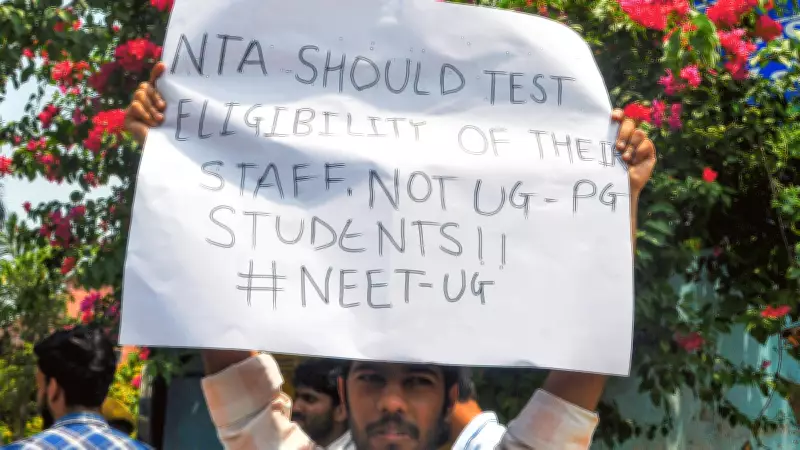
The cancellation of the National Eligibility cum Entrance Test for Undergraduates (NEET-UG) 2026, following widespread allegations of a paper leak, has now escalated to the Supreme Court. A doctors' body, the United Doctors Front (UDF), has filed a petition seeking the dissolution of the National Testing Agency (NTA) in its current form. The UDF argues that the NTA is fundamentally unfit to conduct high-stakes examinations like NEET and demands the creation of a new statutory testing authority through an Act of Parliament.
Background of the Controversy
The NEET-UG 2026 examination was abruptly cancelled after reports surfaced of a massive paper leak, affecting hundreds of thousands of medical aspirants across the country. The leak allegedly occurred through a sophisticated network involving multiple states, raising serious questions about the NTA's ability to secure examination materials and maintain the integrity of the testing process. The UDF, representing a coalition of medical professionals, has been at the forefront of demanding accountability and systemic reform.
Petition in the Supreme Court
In its petition, the UDF has prayed for the following reliefs:

- Dissolution of the NTA in its present form, citing gross negligence and failure to prevent the paper leak.
- Establishment of a new statutory testing authority through an Act of Parliament, with enhanced security protocols and independent oversight.
- Compensation for affected students and a re-conduct of the examination under strict supervision.
The petition also highlights the NTA's track record of irregularities, including previous incidents of question paper leaks and administrative lapses. The UDF contends that the NTA, established as an autonomous body in 2017, has outlived its utility and must be replaced with a more robust and transparent institution.
Reactions and Implications
The move has garnered support from various student groups and opposition parties, who have long criticized the NTA's handling of competitive exams. If the Supreme Court accepts the petition, it could lead to a major overhaul of the examination system in India. The government, however, has defended the NTA, attributing the leak to isolated criminal elements and promising strict action against perpetrators. The court is expected to hear the matter in the coming weeks, and the outcome will have far-reaching consequences for millions of students who rely on NEET for medical admissions.
The UDF's demand underscores the growing public distrust in the NTA and the urgent need for reforms to ensure fair and transparent examinations. As the legal battle unfolds, stakeholders await a decisive verdict that could reshape the future of medical education in India.






