

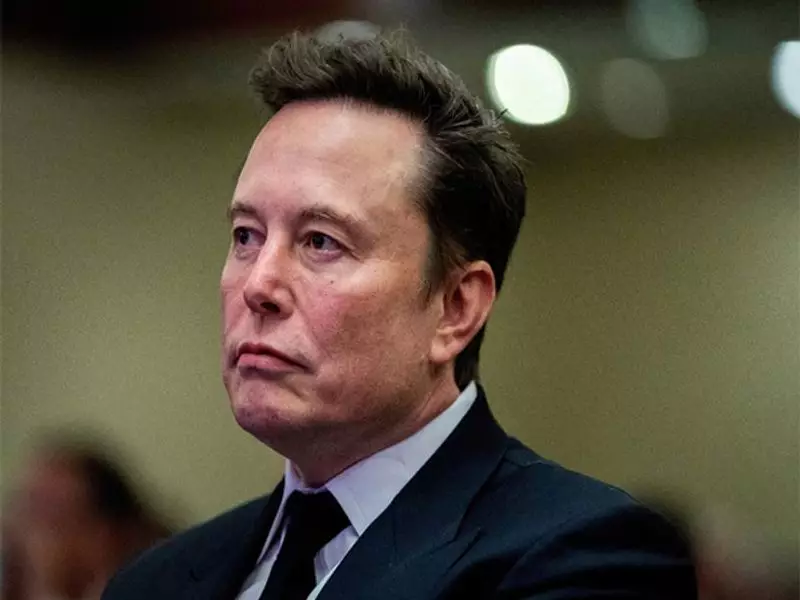
In a stark and sobering warning, billionaire tech mogul Elon Musk has predicted that a major global war is likely within the next five to ten years. The Tesla and SpaceX CEO declared the conflict as 'inevitable,' urging nations to strengthen their military capabilities in preparation.
The Stark Warning from a Tech Visionary
Elon Musk shared his grim geopolitical forecast during a recent interview. He did not mince words, stating directly that a significant war on the world stage is unavoidable in the coming decade. This prediction comes from a figure deeply involved in cutting-edge technology and global affairs, from satellite internet to space exploration, lending weight to his assessment of international tensions.
The core of Musk's argument is that the current trajectory of global politics and military posturing makes a large-scale conflict highly probable. He pointed to escalating tensions between major powers and the complex web of alliances that could rapidly draw multiple nations into a confrontation. His comments reflect a growing concern among analysts about the fragile state of international relations in the 2020s.

The Call for Military Preparedness
Beyond just issuing a warning, Musk presented a clear, albeit controversial, prescription. He emphasized that the best deterrent to war, or the best chance of survival if one breaks out, is military strength. His advice to countries is unambiguous: they must significantly invest in and build up their defense capabilities.
This stance aligns with his previous public statements and actions. Musk has been a vocal proponent of technological advancement in defense and has worked with government agencies on various projects. He believes that a strong defensive posture is not a provocation but a necessary safeguard in an increasingly volatile world. The underlying message is that peace, in his view, is maintained through strength and preparedness, not through hope or diplomacy alone.
Context and Global Reactions
Musk's prediction did not emerge in a vacuum. It arrives amid prolonged conflicts like the war in Ukraine and rising tensions in regions like the South China Sea and the Middle East. The world is witnessing a new era of great-power competition, arms races in cyber, space, and conventional domains, and a breakdown in traditional diplomatic channels.
While Musk's views are influential, they are part of a broader debate. Some security experts agree with his bleak assessment, citing similar factors. Others argue that his prediction is overly deterministic and that the international community still has multiple avenues to de-escalate tensions and avoid a catastrophic war. Nonetheless, his warning serves as a powerful reminder of the high stakes involved in today's geopolitical maneuvering.
The billionaire's comments are likely to spark further discussion on national security budgets, the ethics of arms development, and the role of technology giants in global conflict. As a leader in AI, robotics, and aerospace, Musk's companies are indirectly shaping the future battlefield, making his perspectives on war both relevant and consequential.
In conclusion, Elon Musk has placed a troubling timeline on a potential global conflict. By stating that war is 'inevitable' within 5 to 10 years and advocating for robust military preparedness, he has ignited a crucial conversation about the world's direction in an age of renewed rivalry and technological disruption.






