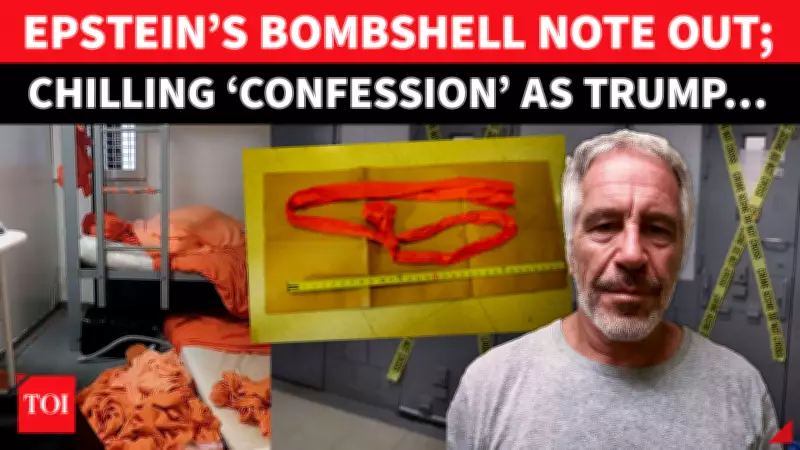
A shocking twist has emerged in the case of Jeffrey Epstein, the convicted sex offender who died in federal custody in 2019. A supposed suicide note, allegedly written weeks before his death, has remained sealed in a New York courthouse for seven years. According to The New York Times, investigators never saw the note, raising serious questions about what may have been missed.
Discovery of the Note
The note was discovered by Epstein's cellmate at the Metropolitan Correctional Center. The message reportedly hinted at Epstein's state of mind before his death, with some suggesting it could implicate powerful figures, including former President Donald Trump. The note's contents have not been publicly disclosed, but sources indicate it may contain references to Epstein's network and potential threats.
Ignored Evidence?
The fact that investigators never reviewed the note has sparked outrage and calls for a new inquiry. Critics argue that this oversight may have allowed crucial evidence to be overlooked. The note was reportedly found in a sealed envelope and handed over to the court, where it remained untouched for years. Legal experts question how such a significant piece of evidence could have been ignored.

Was it ignored evidence or a key piece of the puzzle hidden in plain sight? The revelation has reignited debates about Epstein's death, which was officially ruled a suicide but has been met with skepticism. Conspiracy theories abound, with some suggesting that Epstein was silenced to protect powerful associates.
Trump Connection
The note's potential mention of Trump has drawn particular attention. Epstein and Trump were known to have social ties in the 1990s and early 2000s. While Trump has denied any wrongdoing, the note could provide new insights into their relationship. However, it remains unclear whether the note directly implicates Trump or merely references him.
As the story unfolds, pressure is mounting on authorities to release the note and conduct a thorough investigation. The case continues to captivate the public, raising questions about justice, transparency, and the influence of wealth and power.