

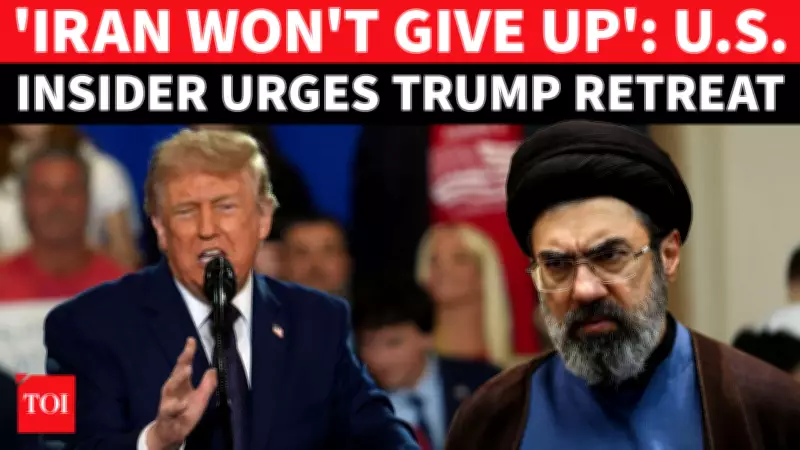
As Donald Trump's plan to exert maximum pressure on Iran to push it toward a peace deal continues to falter, a former U.S. envoy has delivered a stark reality check to the U.S. President. Robert Malley, who served as Joe Biden's special envoy to Iran, argued that Washington fundamentally misunderstands Tehran by believing extreme economic pressure could force the country to abandon what it sees as a core national principle and sovereign right.
Malley's Analysis of the Stalemate
Malley stated that Iran's leadership fears being 'tricked again' after past negotiations, emphasizing that national dignity and political values cannot simply be crushed through economic hardship or military force. He compared the situation to how the United States would react if pressured to surrender values it considered sacred. The former envoy's comments come amid ongoing tensions between the U.S. and Iran, with Trump's 'maximum pressure' campaign failing to yield the desired results.
Understanding Iran's Perspective
According to Malley, the U.S. approach overlooks the deep-seated mistrust within Iran's leadership, rooted in historical grievances and a sense of betrayal. He argued that Tehran views its nuclear program and regional influence as non-negotiable aspects of its sovereignty. The envoy stressed that any viable diplomatic solution must acknowledge Iran's red lines and restore mutual confidence.

Implications for U.S. Policy
Malley's remarks challenge the effectiveness of Trump's strategy, suggesting that a shift toward engagement and respect for Iran's core interests might be necessary. The former envoy warned that continued pressure could further entrench Iran's position and escalate tensions in the Middle East. He called for a more nuanced approach that balances deterrence with diplomacy.
As the standoff persists, the international community watches closely, with many calling for renewed negotiations to prevent a full-blown conflict. Malley's insights offer a critical perspective on why the current U.S. policy may be counterproductive and what alternatives could lead to a peaceful resolution.






