

In a series of chilling cases across Gujarat, police have solved decades-old murders using advanced forensic techniques, confessions, and meticulous investigation. The cases include a 34-year-old murder, a body buried under a kitchen, and multiple instances of domestic violence leading to death.
The Ghost That Waited 34 Years
Shamsuddin Khedawala, an elderly taxi driver from Vatva, Ahmedabad, had been telling clerics for months that he was being haunted by the spirit of his late wife, Farzana Radhanpuri. He complained of visions, voices, and sleepless nights, believing her ghost was responsible for his family's illnesses and financial woes. Despite performing occult rituals, the disturbances persisted. The murmurs about these rituals reached the crime branch, leading to a deeper investigation.
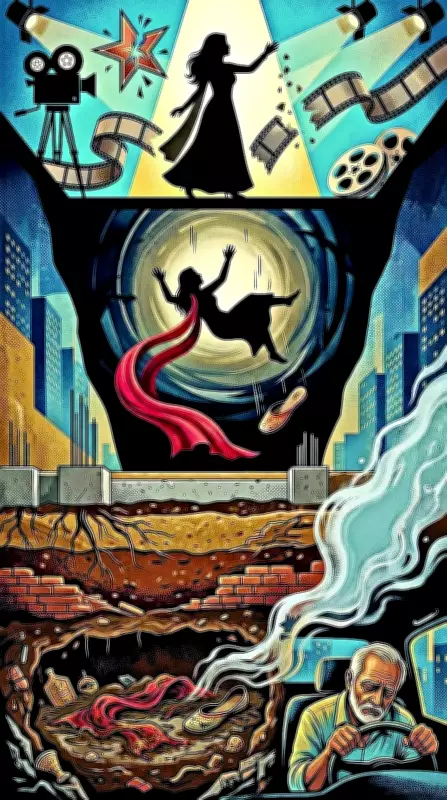
Farzana had not been seen since 1992. There was no missing-person report, no inquiry, and no body. Investigators worked quietly for nearly two months. A senior officer revealed that Farzana, then 25, had come to Ahmedabad from a small town with dreams of making it big in Bollywood. She traveled frequently to Mumbai in the early 1990s to work as an extra-artist but failed to find a breakthrough and eventually got trapped in prostitution.

During this phase, she met Khedawala, then 30, and they married. The relationship turned turbulent over allegations of infidelity. In 1992, police say, Khedawala and three associates killed her and buried her inside a soak pit beneath a house in Qutubnagar, Vatva. In late April, officers excavated the site and recovered skeletal remains nearly 18 feet below the surface. Forensic experts described the bones as brittle, degraded, and full of impurities. Standard DNA-extraction methods used for fresher tissue were unlikely to yield a usable profile. However, the break came from the femur; bone-marrow tissue from the thigh bone retained enough endogenous DNA for amplification.
H P Sanghavi, director of the Directorate of Forensic Sciences, Gujarat, said standard procedures had to be adapted to extract usable genomic DNA from the bone specimen. Since Farzana's parents were no longer alive, the comparison sample was taken from her sister. The match was definitive. Sanghavi called it a rare instance in India of DNA being successfully extracted from such an old specimen and matched as biological evidence. Khedawala and his elder brother Iqbal were arrested. Two other accused had since died. After the bones were recovered and the FIR was filed, police said Khedawala stopped reporting the visions—not because the ghost had been laid to rest, but because the guilt finally had been.
The Missing Missing-Person's Report
For nearly a year, Ruby Ansari and her alleged lover Imran Vaghela cooked meals in a kitchen beneath which her husband lay buried. What gave the kitchen away was not a smell, but an FIR that didn't exist. Three months before the exhumation, a tip reached a crime branch inspector. Mohammed Ansari, a mason from Siwan in Bihar, hadn't been seen in Sarkhej-Fatehwadi for a long time. No missing-person complaint existed—not even from Ruby, his wife of nearly a decade. That blank in the paperwork was the first thread.
There was a second lead. Ruby and Vaghela had lived in the house for months after the murder before moving out. The locked house at Ahmedi Row House had picked up a neighborhood nickname—Bhoot Bangla. Vaghela, informers said, had been telling people he was haunted by Ansari's memory. Ruby said her husband had left for work elsewhere, a line that didn't square with what neighbors described as her growing closeness to Vaghela. Officers put the area under watch. To draw Vaghela out, police planted a cleric on him. Whatever he said in those conversations gave investigators what they needed to act.
Vaghela was detained. He didn't last long in the interrogation room. On November 5, 2025, cops broke through the kitchen floor and found Ansari's remains. A senior DFS official said the sample had deteriorated, but enough DNA was retrieved to match it with Ansari's son. A second profile came from bloodstains on a wooden plank at the scene. Vaghela and two associates allegedly slit Ansari's throat, dismembered the body, and sealed the floor by morning. Ruby, Vaghela, and two others were arrested.

Garbage Excuse
Two pits appeared behind a forest officer's quarters in Bhavnagar's Forest Colony on November 2. A junior officer had brought in an excavator on instructions from his senior, who said the pits were for garbage. Three days later, the senior officer's wife and two children were dead. Shailesh Khambhla, the 40-year-old assistant conservator of forests living in those quarters, smothered Nayana, 42, on the sofa after a bitter morning fight on November 5, then suffocated their children—Pruthva, 13, and Bhavya, 9—with a pillow as they slept.
Two days later, on November 7, he went to police, claimed his wife had left him, and produced WhatsApp messages from her phone saying as much. The story collapsed quickly. The security guard he cited denied seeing his family leave. The messages he produced were judged fabricated. Nayana's call records showed her phone had never left Bhavnagar. The motive, investigators told TOI, was an alleged four-year affair with a female subordinate. Divorce wasn't possible: Khambhla's sister was married to Nayana's brother in a saata-paata bond—leaving one would unravel the other.
Police excavated the pits on November 16 and recovered three bodies. Khambhla was arrested the next day. DNA matched the bones to Nayana's parents and the children's profiles to both her and Khambhla. Saliva and blood lifted from a cushion cover, a bedsheet, and the mattresses placed the victims inside the house—not in an autorickshaw, as Khambhla had earlier told police.
The Son's Text Message
Shilpa Salvi, a 39-year-old dietitian, was last seen on April 20. The next day, her father Pradip Kosta tried calling her from Chhattisgarh; the mobile had been switched off. Shilpa's husband, Vishal, told him he had dropped her near SMIMER Hospital and not seen her since. The Salvis had married in November 2010 and had two children, now 13 and 8. The marriage had been steady while Vishal was employed at a diamond factory. He had been jobless for two years. Vishal had begun suspecting her of having an affair. The quarrels were so frequent that Kosta would travel from Chhattisgarh to mediate.
Kosta arrived in Surat on April 24. The family went to Godadara police. Vishal filed the missing complaint himself. On April 25, Shilpa's son sent a letter to her cousin Prikesh over WhatsApp. The letter was Vishal's. Addressed to the family, it confessed to killing Shilpa on April 20 and pointed police to the proof: his old house in Kagji Chawl, Salabatpura. Vishal disappeared after handing the letter to his son. He was caught within hours. Inside the old house, on the first floor, cops found Shilpa's body inside a wooden box. He had tried to seal it by pouring cement over the remains. The body had been there for five days. Investigators said the murder was a planned one and Vishal had returned to the box in the days that followed to check it wasn't beginning to smell.
The Suicide Note
For six months, Girish Parmar stuck to one story. His wife Priyanka had walked out, taking along their two-year-old daughter Pari. He repeated the line to anyone in Shahpur Vad who asked. Priyanka's grandfather, who had raised her, didn't buy it. He kept asking Parmar to file a missing person's complaint, but the latter refused every time. That refusal was the first crack in the case. About 15 days before the bodies were found, the grandfather went to the police station himself.
Mehsana police opened an inquiry on the strength of that visit and began questioning Parmar. Two weeks later, on May 3, Parmar walked into Vadnagar Civil Hospital, climbed to the fourth floor, and jumped. The fall would have closed as a suicide. But from his pocket, police recovered a folded note allegedly confessing to killing Priyanka, 29, and daughter, Pari, six months earlier and burying them inside their own home. A team dug for two hours through a plastered floor at the Shahpur Vad house and recovered the skeletal remains of a woman and a child, along with a knife. Preliminary investigation points to marital discord.
The Slip During Questioning
Mani Bariya, 65, was last seen on a June afternoon in 2025, walking home from a Junagadh hospital where she'd gone to arrange an Ayushman card for her cancer-stricken husband. Police searched wells, fields, neighboring villages. Her mobile was off; no ransom call was made. For months the case sat open, drifting between theories of kidnapping and accident. The lead came from Mahesh, a temple priest who lived on her route home. During questioning, he contradicted his own account of seeing her that day. He confessed to luring her in, attacking her, stuffing her body into a jute bag, and dumping it in a well. Police say the motive was rape. He had been watching pornography on his phone before the attack. The remains were recovered on February 1.
Suspect Confesses
Taj Mohammad Bhatti, 47, a real-estate dealer from Morbi's Vishipara area, left home on February 19 with an acquaintance, Balu Aghara, to discuss a land deal. He didn't return. His phone remained switched off. His family filed a missing complaint at City B Division police station on February 21. The break came when Aghara was questioned on February 26 and led police to a coal factory compound on Pipli Road. Officers exhumed skeletal remains from beneath a concrete slab. Investigators say Bhatti was lured to a farmhouse near Bhadiyad, beaten to death with wooden sticks and plastic pipes, and the body burnt and buried at the factory. The motive, by police's account, was a soured land transaction. Seven people have been named in the FIR.





