

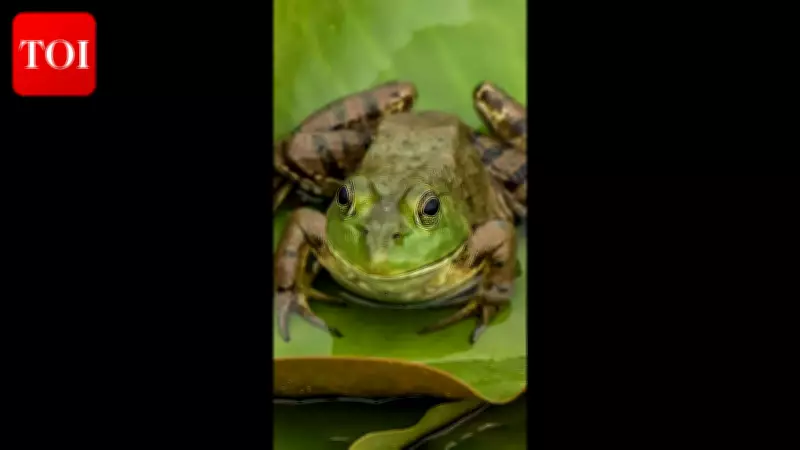
The forest department in Goa has issued a stern warning against the poaching of bullfrogs, a protected species, as the monsoon season brings them out in abundance. Mahanand Paryekar, range forest officer in-charge of the mobile squad in Margao, stated that patrolling teams will be deployed round the clock throughout the season to enforce the ban.
Legal Consequences for Poaching
Bullfrogs are classified as a protected species under Schedule II of the Wildlife Protection Act, 1972. Poaching attracts a penalty of up to Rs 1 lakh, imprisonment of up to three months, or both. Officials emphasized that catching, killing, or selling frogs, or serving frog meat at eating establishments, contravenes the provisions of the Act.
Clampdown on Illegal Trade
Despite the ban, frog legs continue to be sold clandestinely as a delicacy dubbed ‘jumping chicken’ in restaurants along the coastal belt. The forest department aims to curb this illegal trade through enhanced surveillance and strict enforcement.

Ecological Impact
Officials pointed out that the indiscriminate killing of frogs for their meat has led to a drastic decline in their population across the state. This has caused an imbalance in both terrestrial and aquatic ecosystems, a spike in snakes venturing into human settlement areas, and the proliferation of insects responsible for diseases such as malaria.
Public Appeal
Goa consumer action network (Goacan) convenor Roland Martins appealed to the public to stop slaughtering frogs. He said, "Indiscriminate use of fertilisers has affected the lives of frogs. Frogs feed on mosquitoes responsible for malaria and other vector-borne diseases. The indiscriminate killing of frogs for their meat is an ecological crime against the food chain and is the cause of the drastic decline of their population."
The forest department urges citizens to report any instances of poaching or illegal sale of frog meat to the authorities. The round-the-clock patrolling teams will be vigilant to ensure compliance with the Wildlife Protection Act and protect the ecological balance.






