

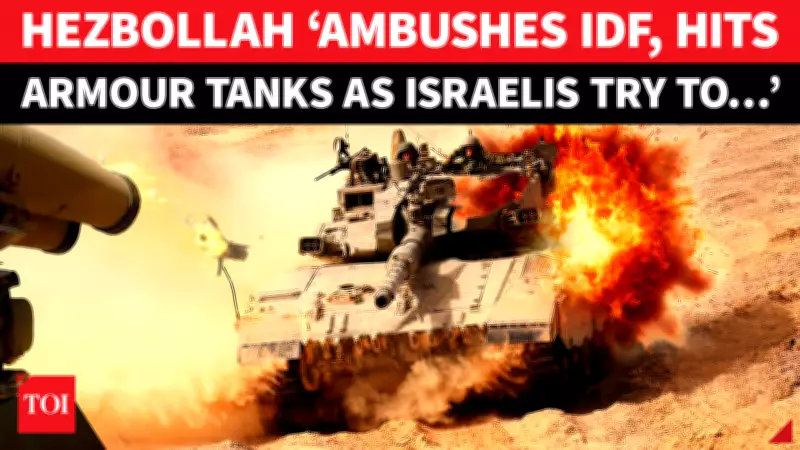
Hezbollah Claims Major Ambush: Israeli Tanks Destroyed, Forces Retreat in Lebanon Clash
Tensions along the volatile Israel–Lebanon border have escalated dramatically following a significant military confrontation. The Lebanese militant group Hezbollah has asserted that it executed a meticulously coordinated ambush targeting Israeli forces in the southern Lebanese town of al-Taybeh. According to Hezbollah's statement, the operation specifically aimed at six Israeli Merkava main battle tanks, utilizing a combination of precision-guided missiles, rockets, and artillery fire.
Details of the Ambush and Israeli Response
Hezbollah reports that the assault resulted in the destruction of multiple armored vehicles, compelling Israeli troops to initiate a tactical retreat from the area. The situation intensified as Israeli military helicopters were reportedly deployed to evacuate wounded soldiers from the battlefield. However, Hezbollah claims that even this evacuation effort came under heavy fire, with the group launching additional rocket and artillery barrages directly at the evacuation zone to disrupt the rescue operation.
The ambush represents a severe escalation in the ongoing border skirmishes between Israel and Hezbollah. The use of guided missiles against advanced tanks like the Merkava indicates a significant capability on Hezbollah's part, potentially altering the dynamics of future engagements. Israeli authorities have not yet issued an official statement confirming or denying the specifics of Hezbollah's claims, but the incident underscores the persistent volatility in the region.

Broader Regional Implications
This clash occurs against a backdrop of heightened regional tensions, with various actors involved in proxy conflicts and direct confrontations. The ambush in al-Taybeh may prompt retaliatory measures from Israel, raising concerns about a wider conflict. Analysts warn that such incidents could spiral into more extensive military exchanges, impacting not only Israel and Lebanon but also neighboring countries and international stakeholders.
The strategic implications are profound, as Hezbollah's ability to target and allegedly destroy advanced Israeli armor demonstrates a continued evolution in its military tactics and arsenal. This event is likely to influence future Israeli defense strategies along the northern border, potentially leading to increased patrols, enhanced surveillance, or preemptive strikes to mitigate similar threats.
Humanitarian and Security Concerns
Beyond the immediate military aspects, the clash raises serious humanitarian and security issues. The targeting of evacuation zones, as claimed by Hezbollah, could violate international norms regarding the protection of wounded personnel and medical evacuations. Such actions may draw condemnation from global bodies and complicate diplomatic efforts to de-escalate the situation.
Residents in southern Lebanon and northern Israel face heightened risks, with the potential for cross-border fire and displacement. Local authorities are likely on high alert, and international observers are monitoring the developments closely to prevent further deterioration. The incident serves as a stark reminder of the fragile peace in the area and the ever-present threat of broader conflict.






