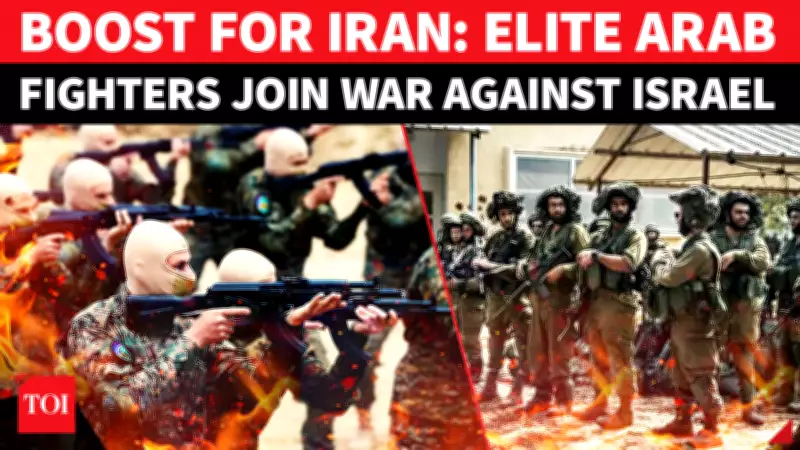
Hezbollah Deploys Elite Radwan Forces in Lebanon as New Fighting Erupts Post-Khamenei Killing
The Middle East conflict is rapidly expanding as Hezbollah, the Iran-backed militant group, has deployed its elite Radwan fighters to confront the Israel Defense Forces (IDF) in southern Lebanon. This significant military escalation follows the recent killing of Iran's Supreme Leader Ali Khamenei in joint strikes by the United States and Israel on March 2, 2026.
Strategic Deployment to Border Region
According to an exclusive report by Reuters, Hezbollah has sent its highly trained Radwan unit back to the volatile border region with Israel, an area from which they had withdrawn after the 2024 war. The Radwan force, known for its specialized combat capabilities, has been specifically tasked with blocking Israeli armored advances near the strategic town of Khiyam, a key location in southern Lebanon.
This deployment marks a critical shift in Hezbollah's military posture, indicating a readiness for direct confrontation with Israeli forces. The move comes as part of Hezbollah's broader entry into the conflict following the attacks on Iran, which have triggered a series of retaliatory actions across the region.

Escalation of Hostilities
Since Hezbollah formally entered the war on March 2, the group has launched multiple rocket and drone attacks from positions north of the Litani River. In response, Israel has conducted counter-strikes, leading to a dangerous cycle of escalation that threatens to engulf the broader Middle East.
The situation is particularly tense given the historical context of Hezbollah's conflicts with Israel and its role as a proxy for Iranian interests in the region. The deployment of elite forces like the Radwan unit underscores Hezbollah's commitment to a more aggressive stance in the wake of Khamenei's death, which has been framed as a catalyst for renewed hostilities.
Implications for Regional Stability
The widening conflict poses severe risks to regional stability, with potential ramifications for neighboring countries and international actors involved in the Middle East. Key implications include:
- Increased Military Engagement: The presence of elite forces like the Radwan unit could lead to more intense and prolonged fighting along the Lebanon-Israel border.
- Proxy War Dynamics: Hezbollah's actions highlight the ongoing proxy war between Iran and Israel, with the US also playing a significant role through its support for Israel.
- Humanitarian Concerns: Escalating violence threatens civilian populations in both Lebanon and Israel, raising alarms about potential humanitarian crises.
- International Response: The situation may prompt increased diplomatic efforts or further military interventions by global powers seeking to de-escalate the conflict.
As the conflict continues to evolve, the deployment of Hezbollah's Radwan forces represents a pivotal moment in the ongoing Middle East tensions, with the potential to reshape regional alliances and security dynamics in the coming weeks.