

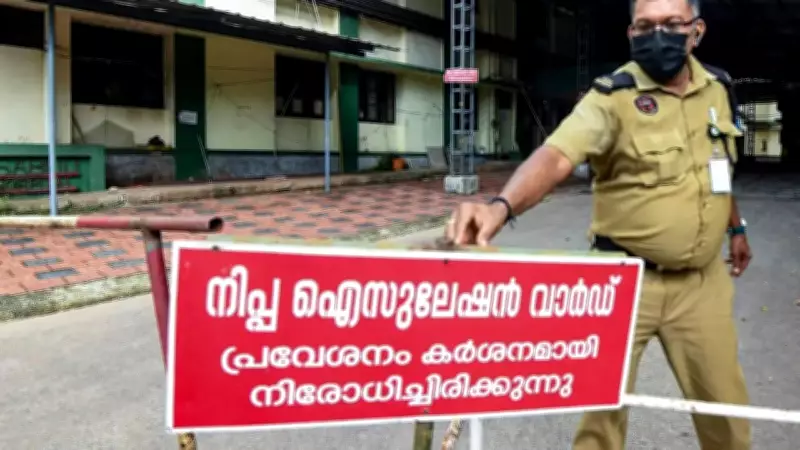
A team from the Indian Council of Medical Research (ICMR) arrived in Kozhikode on Saturday following the confirmation of a Nipah virus infection in the district. The team held discussions with Revenue Minister AP Anil Kumar, doctors, and district administration officials to review the situation and assess measures being taken to prevent further spread of the virus. Officials stated that the ICMR experts are expected to remain in the district for the next few days. Experts from the National Centre for Disease Control (NCDC) have also visited the district.
Three Relatives Test Negative, Surveillance Intensified
The Nipah patient, a 43-year-old man from Ramanattukara, is currently undergoing treatment at the Government Medical College Hospital after laboratory tests confirmed the infection. Health authorities have placed 87 contacts under surveillance and are carrying out extensive monitoring in the affected area. Officials reported that tests conducted on three close relatives of the patient returned negative results. Minister Anil Kumar chaired a high-level review meeting and directed officials to ensure all necessary facilities, medicines, and medical equipment are available for the patient and those under observation.
Nipah Cases in India
According to WHO and government data, India has reported only a limited number of confirmed Nipah cases over the years, though the virus has a high fatality rate and requires intensive containment efforts. Earlier this year, two confirmed Nipah cases were reported in West Bengal, both involving healthcare workers. A male nurse was cured of the disease and discharged; however, a female nurse died of cardiac arrest after developing a lung infection. She had been taken off ventilator support at the end of January.

What is the Nipah Virus?
Nipah is a zoonotic virus that can spread from animals to humans and, in some cases, through human-to-human transmission. Fruit bats, also known as flying foxes, are the natural reservoir of the virus. The infection can cause severe respiratory illness, encephalitis, and neurological complications, with a case fatality rate estimated between 40 and 75 per cent. Currently, there is no approved vaccine or specific antiviral treatment for the disease.






