

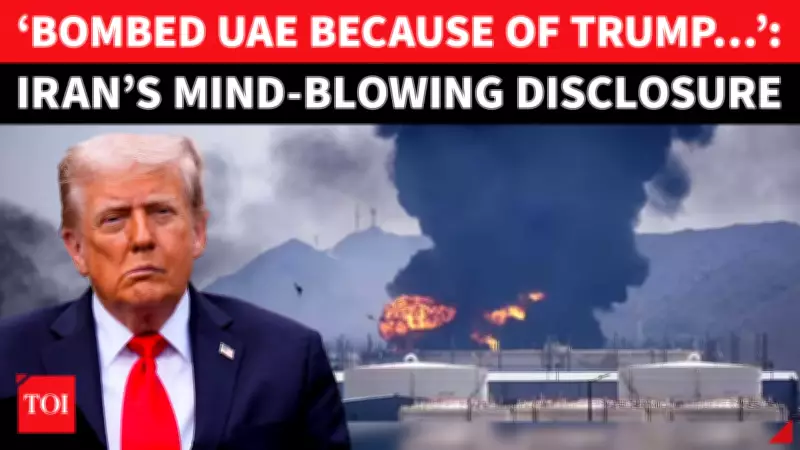
Iran is firing back—verbally. Following the drone strikes that ignited a massive fire at the UAE's Fujairah oil hub, Tehran has issued a flat denial of involvement. Instead, Iranian officials are blaming 'US military adventurism' and the Trump administration's push to force open the Strait of Hormuz for the rising violence. As the UAE counts the cost of the attack and three injured Indian nationals recover, the 'blame game' between Washington and Tehran is pushing the region closer to a total war footing.
Tehran's Accusations
Iranian officials have categorically rejected any role in the Fujairah attacks, which occurred on May 5, 2026. They assert that the United States is using the incident as a pretext to escalate tensions in the Persian Gulf. According to Tehran, the real culprit is 'US military adventurism' and the Trump administration's aggressive strategy to secure control over the Strait of Hormuz, a vital maritime chokepoint for global oil shipments.
US Military Adventurism
Iran's foreign ministry spokesperson stated that the attacks are a direct consequence of Washington's provocative actions in the region. 'The United States is seeking to create chaos and blame Iran for its own failures,' the spokesperson said. 'We call on the international community to see through these baseless accusations.'

Impact on the UAE
The drone strikes caused a massive fire at the Fujairah oil hub, one of the UAE's key energy facilities. Emergency services worked tirelessly to contain the blaze, which resulted in significant damage. The UAE government has not yet officially pointed fingers, but the incident has heightened security concerns across the emirate.
Indian Nationals Injured
Three Indian nationals were among those injured in the attack. They are currently receiving medical treatment and are reported to be in stable condition. The Indian embassy in Abu Dhabi is in contact with local authorities to ensure their well-being.
Regional Tensions
The Fujairah attack is the latest in a series of escalations between Iran and the United States. The 'blame game' between Washington and Tehran is pushing the region closer to a total war footing. Analysts warn that any miscalculation could lead to a full-scale conflict, with devastating consequences for global energy markets and regional stability.
Strait of Hormuz
The Strait of Hormuz is a critical waterway through which about 20% of the world's oil passes. The Trump administration has been pushing to keep the strait open, citing threats from Iran. Tehran, however, views this as a violation of its sovereignty and has threatened to close the strait if provoked.
International Reactions
The international community has called for restraint on all sides. The United Nations has urged both Iran and the United States to de-escalate the situation and engage in diplomatic dialogue. Meanwhile, oil prices have surged following the attack, reflecting market fears of a broader conflict.
As the situation unfolds, the world watches closely. The Fujairah oil blasts have become a flashpoint in the ongoing US-Iran standoff, with no immediate resolution in sight.






