

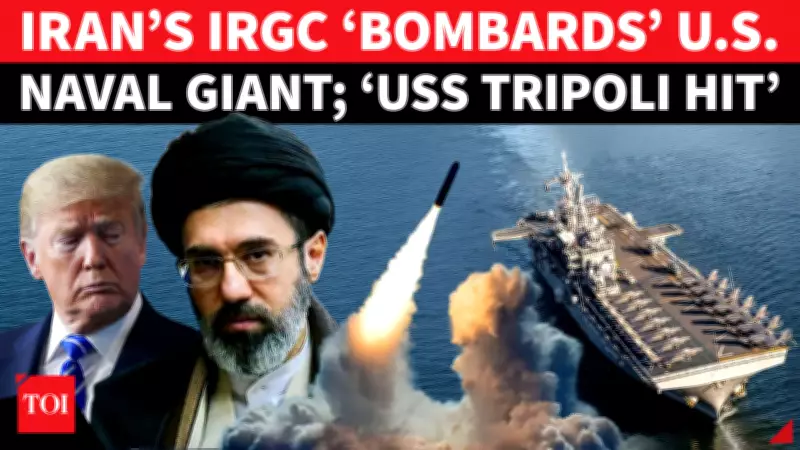
Iran Claims Missile Strike on USS Tripoli, Escalating US-Iran Naval Tensions
In a dramatic development that could significantly escalate regional hostilities, Iran's Islamic Revolutionary Guard Corps has publicly claimed responsibility for a missile strike targeting the United States Navy's USS Tripoli. The USS Tripoli is a critical amphibious assault ship, a vessel of immense strategic importance capable of carrying thousands of military personnel and equipment.
Unverified Claims and Potential Escalation
According to statements from Iranian officials, the alleged strike successfully hit the warship, forcing it to retreat into the southern regions of the Indian Ocean. This claim, if substantiated, would represent a severe and direct military provocation against American naval forces. However, as of now, there has been no official confirmation or comment from the United States Department of Defense or the U.S. Navy regarding any damage, casualties, or the incident itself. The veracity of Iran's assertion remains entirely unverified by independent sources.
The implications of such an event, should it be proven true, are profoundly serious. A direct kinetic attack on a major U.S. naval asset by Iranian forces would mark a dangerous and unprecedented shift in the ongoing shadow conflict between the two nations. Analysts warn this could transition hostilities from proxy engagements and covert operations into open, direct naval confrontation.

Broader Regional War Fears Intensify
This incident raises immediate and grave concerns about the conflict expanding beyond current theaters. A direct U.S.-Iran naval clash in the strategically vital waterways of the Indian Ocean could rapidly draw in regional allies and destabilize global maritime trade routes. The situation threatens to ignite a broader regional war, with potential flashpoints extending across critical Middle Eastern and South Asian maritime zones.
The international community is watching with heightened anxiety, as miscalculation or further escalation could have catastrophic consequences. The lack of U.S. confirmation adds a layer of uncertainty, leaving open questions about the actual events and the potential diplomatic or military responses that may follow.






