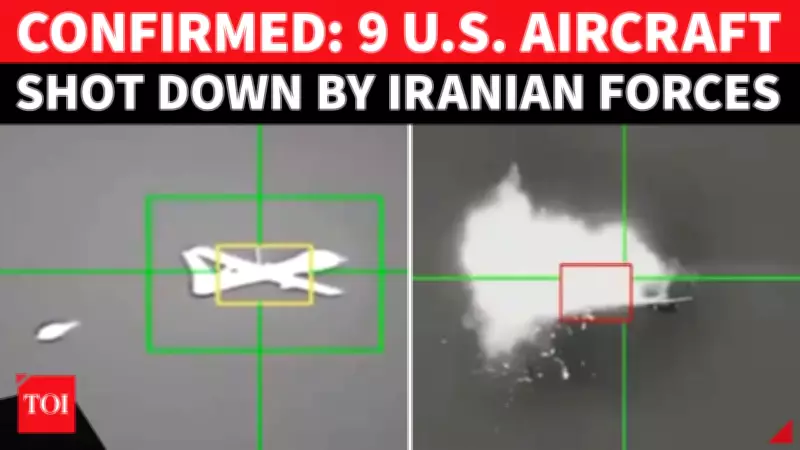
Iranian Forces Reportedly Down Nine American Reaper Drones in Ongoing Conflict
The intensifying war in the Middle East has seen a significant escalation in drone warfare, with Iran now claiming a major victory against U.S. military assets. According to recent reports, Iranian air defenses have successfully shot down nine American MQ-9 Reaper unmanned aircraft over Iranian airspace. This development comes amid a broader regional conflict where both sides have heavily relied on drone technology to strike opposing targets.
High-Value Targets: The $30 Million MQ-9 Reaper Drones
Each MQ-9 Reaper drone is valued at approximately $30 million, representing a substantial loss for the U.S. military. These high-tech unmanned aircraft have been central to American operations, particularly following former President Donald Trump's order for attacks on Tehran on February 28. The Reapers are designed for precision strikes and surveillance, but their vulnerability in high-threat environments is now under scrutiny.
Iran has previously asserted its use of Shahed drones to hit U.S. and Israeli military targets in the Gulf region. In contrast, the U.S. has depended on the Reaper drones to conduct strikes deep within Iranian territory. The downing of multiple Reapers raises critical questions about the effectiveness and survivability of these advanced systems against sophisticated air defense networks.

Broader Implications for Drone Warfare and Regional Stability
The loss of nine Reaper drones highlights the evolving nature of modern warfare, where unmanned systems play a pivotal role. This incident not only represents a tactical setback for the U.S. but also emboldens Iranian military capabilities. Analysts are closely monitoring how this will impact future operations and strategic calculations in the volatile Middle East.
The ongoing conflict has seen both sides leveraging drones to minimize human casualties while maximizing strategic impact. However, the effectiveness of such technology is increasingly tested as defenses adapt and improve. The downing of these drones underscores the challenges of operating in contested airspace and the need for continuous innovation in military technology.
Context of Escalating Tensions and Military Posturing
This development occurs against a backdrop of heightened tensions, with various actors in the region engaging in aggressive posturing. Related reports have detailed other significant events, such as Hezbollah's rocket-drone attacks on Israeli towns, Iranian missile strikes near Jerusalem, and political criticisms from U.S. senators regarding war strategies. These incidents collectively paint a picture of a region on the brink, where drone warfare is a key component of military strategy.
The strategic significance of the Strait of Hormuz and other critical waterways adds another layer of complexity, with global powers like China being drawn into the crisis. The downing of U.S. drones by Iran may influence diplomatic and military responses, potentially altering the dynamics of the conflict. As both sides assess their losses and capabilities, the future of drone operations in high-threat environments remains uncertain, prompting reevaluation of tactics and technologies.