

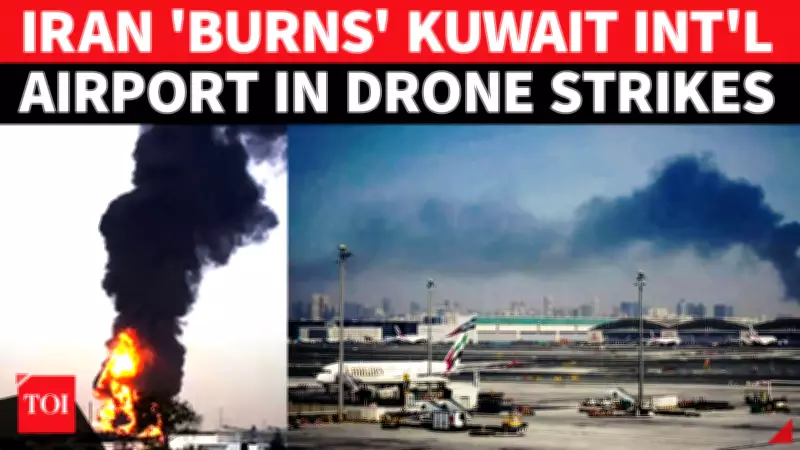
Iran Launches Retaliatory Drone Strike on Kuwait International Airport
In a significant escalation of regional hostilities, Iran has conducted a targeted drone attack on Kuwait International Airport. Multiple unmanned aerial vehicles struck a critical fuel storage tank at the airport, resulting in a substantial fire that prompted an immediate emergency response. This aggressive move is widely viewed as a direct retaliation for the intensifying military strikes by the United States and Israel against Iranian interests, marking a dangerous new phase in the ongoing conflict.
Emergency Response Activated as Firefighters Contain Blaze
Kuwaiti authorities confirmed that emergency protocols were swiftly enacted following the drone assault. Firefighting teams were deployed to the scene and successfully managed to contain the blaze, preventing it from spreading to other airport facilities. While initial assessments indicate that the damage is primarily material, with no immediate reports of casualties, the incident has severely disrupted airport operations and heightened security alerts across the nation.
Growing Threats to Critical Infrastructure in the Gulf Region
This attack underscores the escalating risks to vital infrastructure throughout the Gulf region. As the conflict between Iran and the US-Israel alliance approaches its one-month milestone, nations like Kuwait find themselves increasingly vulnerable to cross-border strikes. The targeting of an international airport, a key logistical and economic hub, signals a strategic shift towards undermining regional stability and economic security.

- The drone strike on Kuwait follows a series of recent escalations, including Iran's use of cluster munitions near Tel Aviv, which caused injuries and significant damage in multiple Israeli cities.
- Former US President Donald Trump has made major announcements regarding Iran amid ongoing strikes on American bases, complicating diplomatic efforts.
- Analysts warn that the Middle East conflict is spiraling out of control, with concerns that US and Israeli actions may be playing into Iranian strategic traps.
- Revelations about Russia's alleged support for Iranian missile and drone attacks against US targets in the Gulf have added another layer of complexity to the geopolitical landscape.
- Speculation about Saudi Arabia's potential entry into the war has intensified, following statements from Trump and retaliatory strikes by Iran's Islamic Revolutionary Guard Corps (IRGC) on the kingdom.
Fears of Further Escalation and Regional Implications
The attack on Kuwait International Airport has reignited fears of a broader regional war. Gulf nations, already on high alert, are now grappling with the tangible threat of further drone and missile strikes on critical assets. The incident highlights the precarious position of these countries, caught in the crossfire of a proxy conflict that shows no signs of abating. With diplomatic channels strained and military postures hardening, the potential for miscalculation and uncontrolled escalation remains alarmingly high.






