

Iran's Combat Encounter Raises Questions About F-35's Invincibility
The F-35 Lightning II fighter jet, manufactured by American defense giant Lockheed Martin, has long been celebrated as the pinnacle of modern military aviation technology. Described by its creators as "the most lethal, survivable, and connected fighter aircraft for America and its allies," this fifth-generation stealth fighter represents a multi-billion dollar investment in air superiority.
The Stealth Promise and Recent Reality
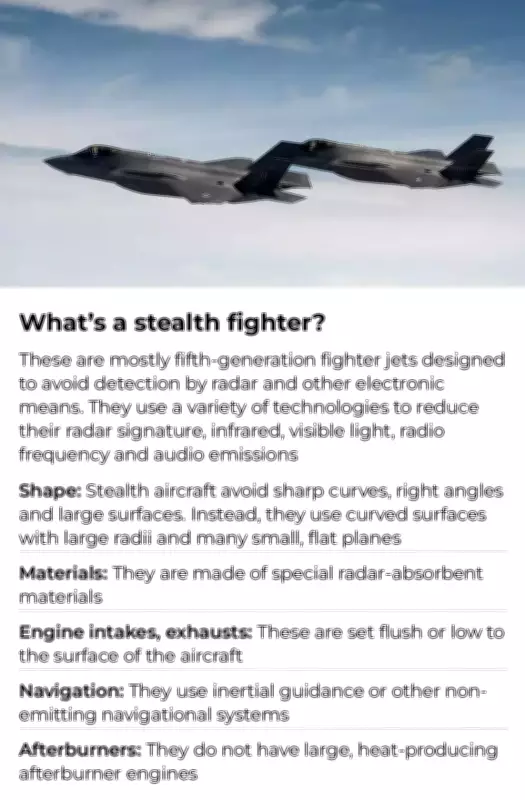
Central to the F-35's formidable reputation is its revolutionary stealth technology, engineered to provide what Lockheed Martin terms "extremely low observability." This sophisticated design philosophy renders the aircraft nearly invisible to enemy radar systems across multiple spectrums, theoretically allowing it to operate undetected in contested airspace while delivering precision strikes against heavily defended targets.
The aircraft's advanced sensor fusion capabilities are designed to seamlessly integrate operations across air, land, sea, space, and cyber domains, creating what military strategists call a "decisive battlefield advantage" through superior situational awareness and networked warfare capabilities.

Combat Incident Challenges Established Narrative
However, a recent combat engagement involving Iranian forces has cast unexpected doubt on these long-held assumptions about the F-35's capabilities. While specific operational details remain classified, defense analysts confirm that the incident has prompted serious reevaluation of the aircraft's much-touted invulnerability in contested environments.
This development is particularly significant because the F-35 program represents not just advanced technology but a cornerstone of modern airpower doctrine for the United States and numerous allied nations. With thousands of aircraft planned for production and deployment worldwide, any potential vulnerability could have far-reaching implications for global military balance and defense planning.
Technical Implications and Strategic Consequences
The emerging questions focus on several critical areas:
- Radar Cross-Section Effectiveness: Whether Iran's detection methods have revealed previously unknown limitations in the F-35's stealth characteristics
- Electronic Warfare Resilience: How the aircraft's sophisticated electronic countermeasures performed against Iranian air defense systems
- Operational Adaptability: The fighter's ability to maintain mission effectiveness when facing unexpected technological countermeasures
- Strategic Deterrence Value: How potential vulnerabilities might affect the aircraft's role as a deterrent against advanced adversaries
Military experts emphasize that no weapon system is truly invulnerable, and the discovery of potential weaknesses is an expected part of technological evolution in warfare. However, the specific nature of the Iranian encounter has raised particular concerns because it challenges fundamental assumptions about fifth-generation fighter capabilities that have guided defense planning for decades.
Broader Context and Future Developments
This incident occurs against a backdrop of increasing technological competition in military aviation, with multiple nations developing advanced air defense systems specifically designed to counter stealth aircraft. The F-35's performance in real combat situations provides invaluable data not just for the United States and its allies, but also for potential adversaries seeking to develop countermeasures.
Defense analysts note that such revelations, while potentially concerning, also drive necessary innovation and adaptation. The response from Lockheed Martin and Pentagon officials will likely involve both immediate tactical adjustments and longer-term technological enhancements to address any identified vulnerabilities.
As the global defense community analyzes this development, the fundamental question remains: does this represent a temporary setback that can be addressed through technological upgrades, or does it indicate more fundamental limitations in current stealth technology that will require revolutionary new approaches to aerial warfare?






