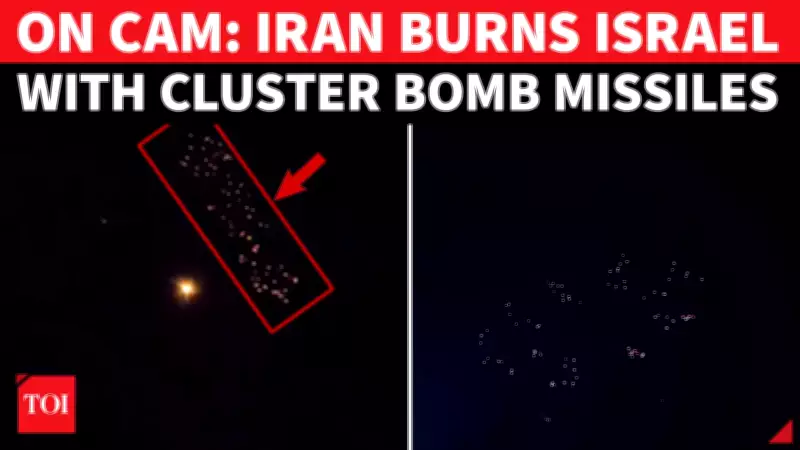
Iran Unleashes Cluster Bomb Missile Assault on Israeli Heartland
In a dramatic escalation of hostilities, the Islamic Republic of Iran has launched a significant ballistic missile strike against Israel, specifically targeting the densely populated central regions including the cities of Tel Aviv and Jerusalem. The attack, which occurred in the early hours, involved missiles equipped with controversial cluster bomb warheads, designed to maximize damage over a broad area.
Widespread Impact and Terrifying Footage Emerges
Ground footage from the scene shows multiple small explosive impacts detonating across urban landscapes, following reports that the missile warheads opened mid-air to disperse their deadly payload. According to official statements from the Israel Defense Forces (IDF), each cluster missile is capable of releasing approximately twenty submunitions, scattering them across an eight-kilometre radius. This tactic significantly increases the potential for collateral damage and poses severe challenges to civilian protection measures.
Air raid sirens pierced the morning air in Tel Aviv, prompting residents to scramble for bomb shelters in a scene of controlled panic. Emergency services were immediately activated, with teams dispatched to assess and respond to the multiple impact sites recorded by authorities. Remarkably, initial reports indicate no immediate injuries, though comprehensive damage assessments are ongoing as teams work to secure affected areas.

Military Analysis and Strategic Implications
The use of cluster munitions in this attack marks a dangerous intensification in the conflict, as these weapons are widely criticized for their indiscriminate nature and long-term threat from unexploded ordnance. The IDF's confirmation that air defenses were compromised during the barrage raises serious questions about Israel's missile defense capabilities under sustained, sophisticated assault.
This strike represents a direct and calculated escalation by Iran, moving beyond proxy warfare to overt, long-range missile attacks on Israeli population centers. The psychological impact on the civilian population is profound, with the sound of sirens and explosions creating a climate of fear and uncertainty. The international community is closely monitoring the situation, concerned about the potential for further escalation and regional destabilization.
Ongoing Response and Security Measures
Israeli authorities have implemented full emergency protocols, with security forces on high alert across the country. The government is expected to convene an emergency security cabinet meeting to discuss response options and next steps. Meanwhile, residents in central Israel have been advised to remain near protected spaces and follow official instructions as the threat level remains elevated.
The attack comes amid already heightened tensions in the Middle East, with previous skirmishes and diplomatic standoffs between Iran and Israel. This direct missile assault significantly raises the stakes, potentially drawing in other regional actors and global powers concerned about the spread of conflict. The world watches anxiously as both nations navigate this dangerous new phase in their long-standing confrontation.