Iran fired ballistic missiles and drones towards Bahrain and Kuwait early on Saturday in retaliation for recent US military strikes, prompting condemnation from Gulf states and raising fresh concerns over regional stability. Bahrain and Kuwait said the incoming projectiles were intercepted, while Iran claimed it had targeted American military assets in both countries. Tehran described the attacks as a response to US strikes on surveillance facilities on Qeshm Island and near Sirik, which it said were used to protect Iran's borders and secure international shipping routes. Iranian officials accused Washington of violating a fragile ceasefire.
US Intercepts and Response
The US military said it intercepted several Iranian missiles and drones launched towards Gulf allies and the Strait of Hormuz before carrying out strikes on Iranian coastal surveillance radar sites. US Central Command stated that the drones posed an immediate threat to maritime traffic in the region. Iran's Revolutionary Guard, meanwhile, said it had targeted the Ali Al Salem air base in Kuwait, which hosts US forces, and the US Navy's Fifth Fleet headquarters in Bahrain. The US military reported no casualties among American personnel.
Economic Measures Under Consideration
Washington is considering tougher economic measures against Tehran. According to a source familiar with the matter, US Treasury Secretary Scott Bessent has ordered an assessment of damage sustained by Gulf allies and is examining options to make frozen Iranian assets available for reconstruction and repair efforts linked to Iranian attacks. The move could involve billions of dollars in Iranian funds held abroad and is being viewed as both a punitive measure against Tehran and a signal of support for Gulf partners. The proposal is part of a broader effort by Washington to bolster regional partners amid heightened tensions.

Diplomatic Efforts Intensify
Diplomatic activity has intensified alongside the military confrontation. Pakistan's Interior Minister Mohsin Naqvi arrived in Tehran carrying a reported message from Pakistan Army Chief Field Marshal Asim Munir, as Islamabad continues to position itself as a mediator between the United States and Iran. The visit follows earlier Pakistan-facilitated talks that failed to produce a breakthrough but kept communication channels open. Naqvi is expected to hold talks with Iranian Foreign Minister Abbas Araghchi, according to Iran's semi-official Tasnim News Agency. The Iranian Students' News Agency also reported that the Pakistani minister is carrying a letter from Munir to Iran's Supreme Leader Ayatollah Mojtaba Khamenei.
Regional Spillover
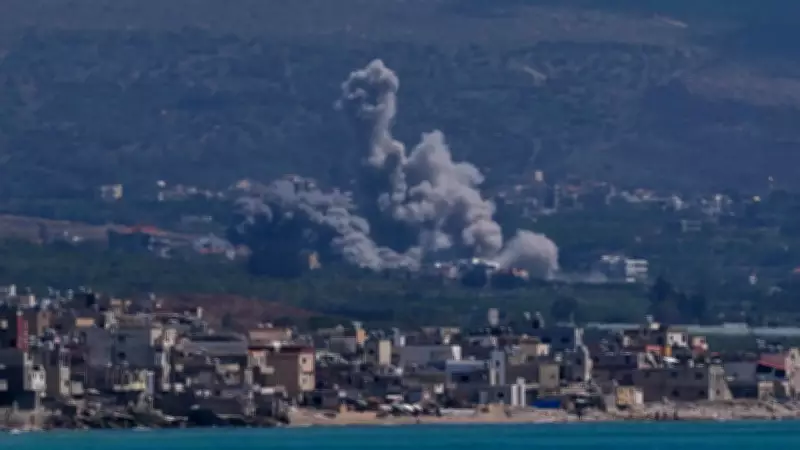
Elsewhere, the Israel-Lebanon front remains active. Israel's strike on a Lebanese army patrol that killed military personnel drew condemnation from Saudi Arabia and Qatar, both of which accused Israel of violating Lebanon's sovereignty. Hezbollah, meanwhile, claimed it carried out 22 attacks on Israeli forces in southern Lebanon over the past day, highlighting the continued risk of escalation beyond the Gulf theatre. International responses continue to grow. Pope Leo publicly rejected characterisations of the US-Israel campaign against Iran as a just war, while the Palestinian Authority condemned Iran's missile attacks on Bahrain and Kuwait, signalling the increasingly complex diplomatic alignments emerging across the region.
Impact on Civilian Spheres
The conflict is also spilling into civilian spheres, including international sport and global trade. Iran's World Cup football team has been informed that players will only be allowed to enter the United States on match days and must leave immediately afterwards. Meanwhile, security concerns around the Strait of Hormuz continue to affect shipping and energy markets, with LNG carriers and commercial traffic being closely monitored as governments and businesses brace for further uncertainty. The latest escalation comes as the Trump administration seeks to revive negotiations with Tehran aimed at ending the conflict. While US and Iranian negotiators reportedly reached a tentative agreement last week to extend the ceasefire by 60 days and begin fresh talks on Iran's nuclear programme, key differences remain unresolved.