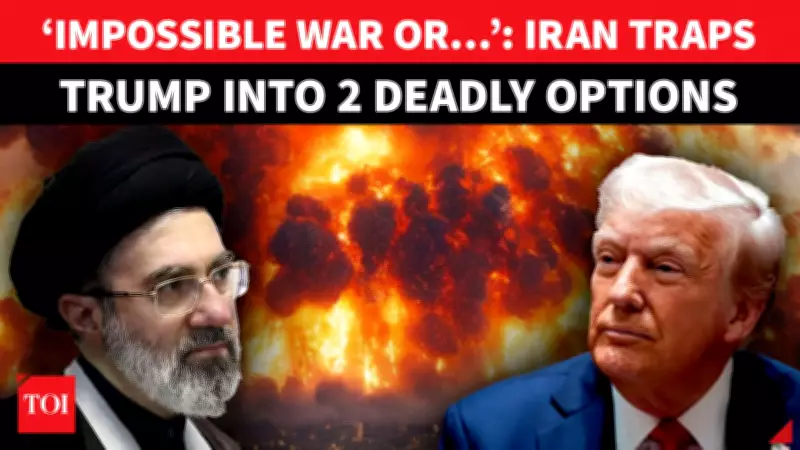
Tehran's Revolutionary Guards have issued a stark challenge to Donald Trump, declaring that Washington now faces only two stark choices in the stalled conflict: attempt what they called an 'impossible' military operation against the Islamic Republic, or settle for what Iran dismissively labels a 'bad deal' to end hostilities.
Iran's Ultimatum
The Islamic Revolutionary Guard Corps (IRGC) has presented the United States with a clear ultimatum, rejecting any middle ground. According to Iranian officials, the options are deliberately designed to corner the Trump administration, as any military engagement would be costly and unpredictable, while a negotiated settlement would be seen as a concession to Tehran.
Military Posturing
Iran has been bolstering its military capabilities in the Persian Gulf, including the deployment of fast attack boats and what it calls a 'mosquito fleet' to challenge US naval superiority. The IRGC has also hinted at the use of unconventional weapons, such as 'dolphin bombs,' to disrupt enemy operations. These moves are aimed at demonstrating that any US military action would come at a high price.

Diplomatic Stalemate
On the diplomatic front, Iran has laid out 14 demands with a 30-day deadline, which it says must be met for any deal to be considered. The US has so far rejected these terms, with Trump hinting at further strikes instead. The standoff has escalated tensions in the region, particularly in the Strait of Hormuz, a critical chokepoint for global oil shipments.
International Reactions
China has reportedly warned Trump that upcoming talks with Xi Jinping will focus heavily on the Iran issue, seeking to de-escalate the situation. Meanwhile, Jordan has launched airstrikes in southern Syria targeting smuggling networks linked to Iran, indicating a broader regional conflict.
The situation remains fluid, with both sides refusing to back down. The world watches as Iran and the US edge closer to a confrontation that could have far-reaching consequences for global security and the economy.