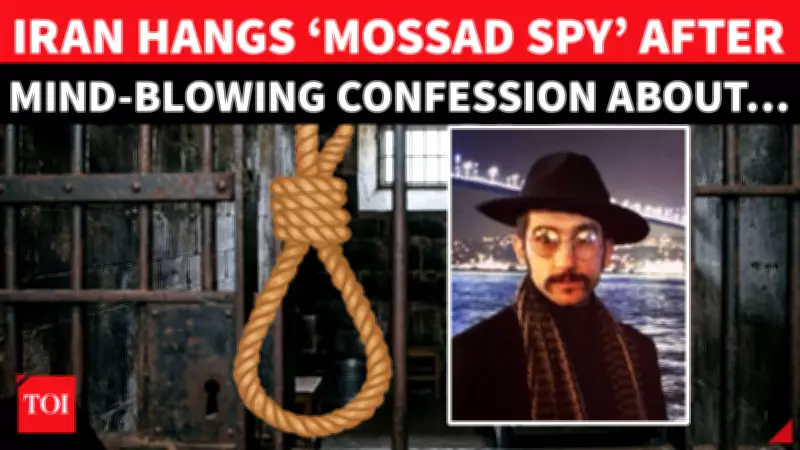
Iranian authorities have announced the execution of Ehsan Afrashteh, an individual accused of spying for Israel and receiving training from the Mossad intelligence agency in Nepal. According to Tehran, Afrashteh passed sensitive information about the Islamic Republic to Israeli intelligence services. The execution was carried out on May 13, 2026, as reported by Iranian state media.
Confession Allegedly Fabricated
Human rights organization HRANA (Human Rights Activists News Agency) has strongly disputed the legitimacy of the case, claiming that the confession used to convict Afrashteh was fabricated under duress. The group alleges that Iranian authorities coerced a false admission of guilt, a common practice in politically charged espionage trials. HRANA has called for international scrutiny of the case.
Second Execution in Days
This execution comes just days after Iran hanged another individual described as a “CIA and Mossad double agent,” who was allegedly linked to sensitive satellite-related scientific centers. The back-to-back executions underscore the escalating tensions between Iran, Israel, and the United States. Analysts point to an intensifying covert intelligence confrontation in the region, with both sides engaging in tit-for-tat operations.

Geopolitical Context
The hangings occur amid a broader context of heightened hostilities. Iran has repeatedly accused Israel and the United States of conducting espionage and sabotage operations on its soil. In response, Tehran has ramped up its execution of alleged spies, drawing condemnation from human rights groups and Western governments. The U.S. State Department has not yet commented on the latest execution, but previous similar cases have led to sanctions against Iranian officials.
Human Rights Concerns
International human rights organizations have consistently criticized Iran’s judicial system for its lack of transparency and use of forced confessions. The execution of Ehsan Afrashteh adds to a growing list of controversial spy cases in Iran, where defendants often face closed trials and limited access to legal representation. The United Nations has urged Iran to halt executions and ensure fair trials, but Tehran maintains that such measures are necessary for national security.
The developments highlight the ongoing shadow war between Iran and its adversaries, with the human cost falling on individuals accused of espionage. As tensions continue to simmer, further executions are likely, raising alarm among rights advocates worldwide.