

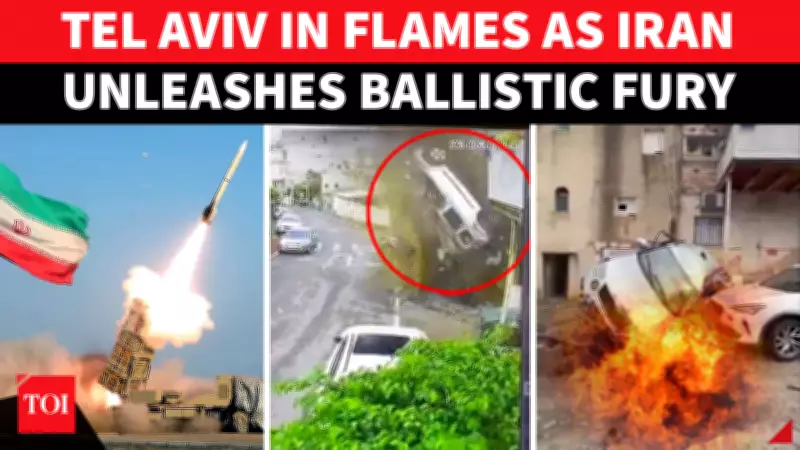
Iran Escalates Conflict with Major Missile Barrage on Israeli Cities
The ongoing conflict between Iran and Israel has dramatically escalated, with Iran launching a massive missile attack targeting Tel Aviv and other central Israeli towns. The assault has resulted in multiple casualties and injuries, marking a significant intensification of hostilities in the region.
Missile Onslaught Overwhelms Israeli Defenses
According to military reports, Iran has fired over 400 missiles since the conflict began, with the latest salvos specifically aimed at population centers in central Israel. The Israel Defense Forces (IDF) confirmed fresh missile launches, forcing millions of Israeli citizens into shelters as air raid sirens sounded across the country.
Israeli defense systems struggled to intercept the sheer volume of incoming projectiles, with some cluster warheads reportedly breaching defensive barriers. This has raised serious concerns about the effectiveness of current missile defense capabilities against such large-scale attacks.

Regional Crisis Expands Beyond Israel's Borders
The conflict's impact is spreading beyond Israel's immediate territory. In a concerning development, debris from intercepted missiles has caused fatalities in Abu Dhabi, killing two people and injuring others while damaging vehicles. This incident has sent shockwaves through the United Arab Emirates and highlights how regional conflicts can have unintended consequences for neighboring nations.
Diplomatic Efforts Face Significant Obstacles
Despite claims from former U.S. President Donald Trump that negotiations are underway to resolve the crisis, Iranian officials have firmly denied any active diplomatic talks. This contradictory messaging suggests that immediate de-escalation appears unlikely, with both sides seemingly preparing for continued hostilities.
The situation remains fluid and dangerous, with military analysts warning that the conflict could potentially draw in other regional actors and create broader instability across the Middle East. Civilian populations on both sides face increasing risks as military exchanges intensify.






