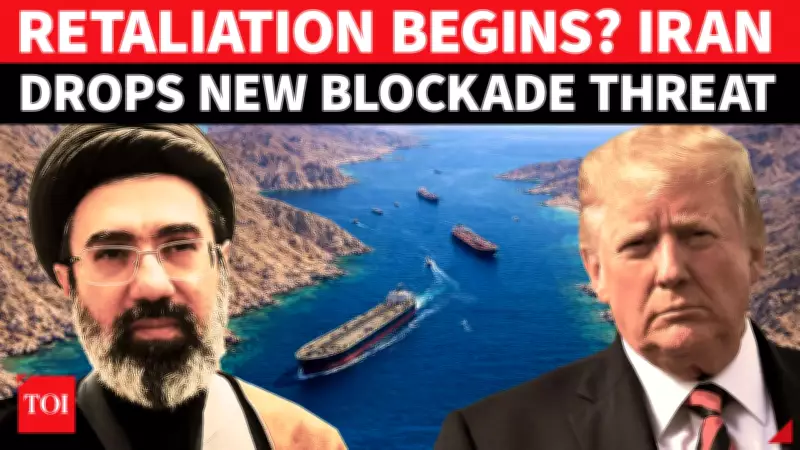
A senior Iranian lawmaker has issued a stark warning to the United States, suggesting that Iran's leverage over global oil routes extends beyond the already tense Strait of Hormuz. The warning shifts focus to the Bab el-Mandeb Strait, a critical maritime chokepoint that could escalate the ongoing crisis into a broader confrontation.
Iran's Escalation Threat
In a statement that has sent ripples through global energy markets, Iranian MP Abolfazl Zohrevand declared: "Whoever controls the Strait of Hormuz is clearly the victor… If necessary, we can also influence Bab-el-Mandeb." The blunt message signals that Tehran is prepared to exert pressure on multiple global oil arteries simultaneously, potentially disrupting energy supplies and driving up prices further.
Global Oil Shock Intensifies
The warning comes amid an already volatile situation in the Middle East, where tensions between Iran and the United States have pushed oil prices to record highs. The Strait of Hormuz, through which about 20% of the world's oil passes, has been a focal point of recent confrontations, with Iran reportedly deploying attack vessels and renewing assaults on commercial shipping. Now, the Bab el-Mandeb Strait, a vital route connecting the Red Sea to the Gulf of Aden, could become a new flashpoint.

Strategic Significance of Bab el-Mandeb
The Bab el-Mandeb Strait is a narrow waterway between Yemen and Djibouti, through which an estimated 7% of global seaborne oil transits. It is also a key route for natural gas and container shipping. Any disruption here would not only affect oil supplies but also global trade, potentially triggering a wider economic crisis. Iran's ability to influence this strait, possibly through its ties with Houthi rebels in Yemen, adds a new dimension to the conflict.
International Reaction
The international community has reacted with alarm to the Iranian lawmaker's statement. Analysts warn that a two-front disruption of oil routes could have catastrophic consequences for the global economy, which is already reeling from the effects of the ongoing war. The United States has not yet officially responded, but the warning is likely to heighten calls for a diplomatic resolution to the crisis.
As the situation develops, all eyes remain on the strategic waterways of the Middle East, where the next move could determine the trajectory of the global oil market and international security.