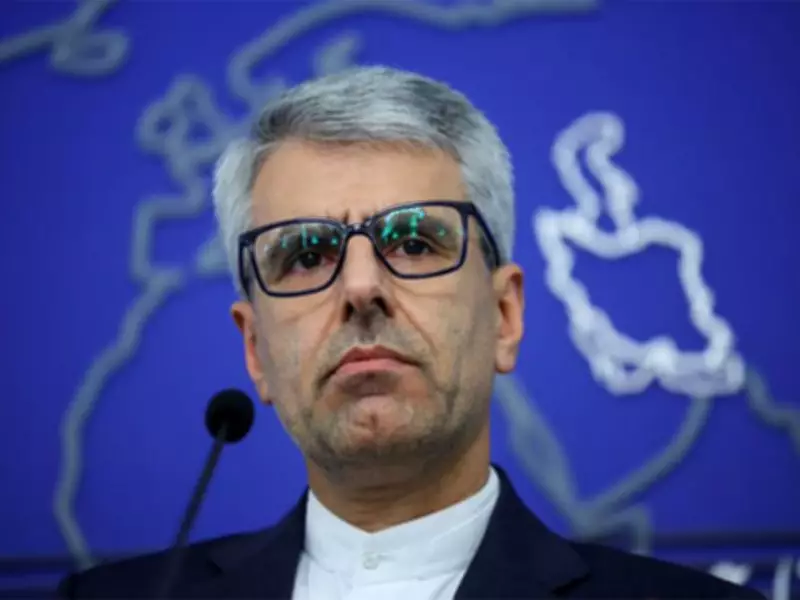
Iran has rejected German President Frank-Walter Steinmeier's characterization of the ongoing conflict in West Asia as an 'unnecessary war,' asserting that the United Nations Charter does not recognize the concept of a 'necessary war.' The Iranian Foreign Ministry issued a statement on Wednesday, criticizing Steinmeier's remarks made during his visit to the region.
Iran's Response
In a strongly worded statement, the Iranian Foreign Ministry said, 'The UN Charter does not recognize the notion of a necessary war. All wars are unnecessary and illegal under international law.' The ministry accused Steinmeier of ignoring the root causes of the conflict and of taking sides in the matter.
Iran further emphasized that the German president's comments were 'biased and unhelpful' and called on Germany to adopt a more balanced approach to the situation in West Asia. 'Such statements only serve to escalate tensions and undermine efforts for peace,' the statement added.

Background of the Conflict
The West Asia conflict has been a long-standing issue involving multiple regional and international actors. The recent escalation has drawn widespread international concern, with various world leaders calling for de-escalation and dialogue. Steinmeier's comments were part of a broader diplomatic push by Germany to address the crisis.
Steinmeier, during his visit, described the conflict as 'an unnecessary war that could have been avoided.' He urged all parties to return to the negotiating table and seek a peaceful resolution. However, Iran's reaction highlights the deep divisions and differing perspectives on the conflict.
International Reactions
The international community has been divided in its response to the West Asia conflict. Some nations have supported Iran's stance, arguing that external powers should not label conflicts without understanding the complexities. Others have backed Steinmeier's call for peace, emphasizing the need for immediate cessation of hostilities.
The United Nations has repeatedly called for a ceasefire and a return to diplomatic channels. The UN Secretary-General has stressed that there is no military solution to the conflict and that only dialogue can bring lasting peace.
Implications for Iran-Germany Relations
This diplomatic spat could strain relations between Iran and Germany, two countries that have historically maintained economic and political ties. Germany has been a key player in the Iran nuclear deal, formally known as the Joint Comprehensive Plan of Action (JCPOA), and has sought to preserve the agreement despite US withdrawal.
Analysts suggest that such rhetoric could complicate future diplomatic efforts. 'Public disagreements between Iran and European powers make it harder to find common ground,' said a political analyst based in Tehran. 'Both sides need to engage in constructive dialogue rather than public criticism.'
As the conflict continues, the world watches closely to see if diplomatic efforts can overcome the current impasse. Iran's firm rejection of Steinmeier's remarks indicates that the path to peace remains fraught with challenges.