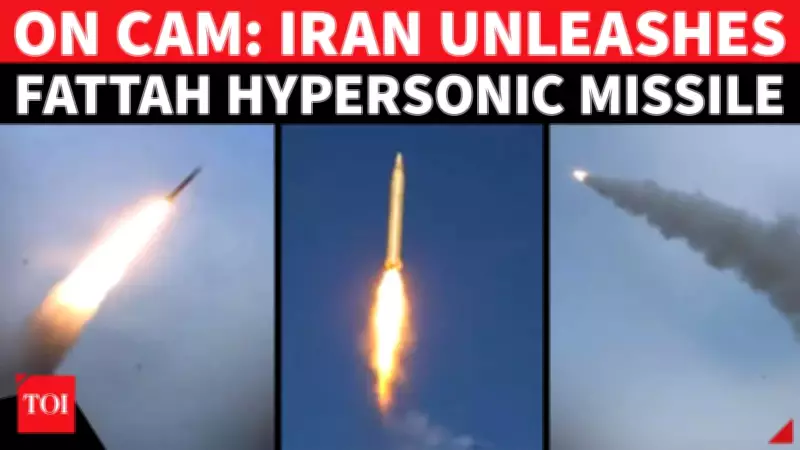
Iran Debuts Fattah Hypersonic Missile in High-Stakes Military Demonstration
In a dramatic escalation of Middle East hostilities, Iran has publicly unveiled a video featuring what it asserts is the Fattah hypersonic-capable missile. This revelation comes as Tehran intensifies its military posture amid fierce exchanges with United States and Israeli forces, following a series of unprecedented missile strikes and significant leadership casualties in the region.
Show of Force Amid Rising Conflict
Iranian state media broadcasted the footage of the Fattah missile, alongside displays of ballistic missile systems such as the Qadr Emad, as part of a broader show of force. The timing coincides with heightened rhetoric from Tehran, which has begun discussing a "long war" against America and Israel, signaling a potential protracted conflict that has set off global security alarms.
The Middle East is currently experiencing explosive tensions, with West Asia becoming a focal point of international concern. The release of this video serves as a stark reminder of Iran's advancing military capabilities and its willingness to project power in the face of adversarial relations.

Context of Escalating Hostilities
This military display follows recent incidents that have further inflamed regional dynamics. Reports indicate that U.S. and Israeli forces have been engaged in intense exchanges with Iranian-backed elements, leading to a cycle of retaliatory actions. The unveiling of the Fattah hypersonic missile is seen as a direct response to these developments, aiming to deter foreign intervention and assert Iran's strategic autonomy.
Hypersonic missiles, like the Fattah, are capable of traveling at speeds exceeding Mach 5, making them difficult to intercept with current defense systems. This technological advancement could potentially alter the balance of power in the region, posing new challenges for U.S. and Israeli military planners.
Global Implications and Security Concerns
The international community is closely monitoring the situation, as the escalation threatens to destabilize an already volatile region. Security experts warn that Iran's actions, coupled with its aggressive rhetoric, could lead to a broader conflict involving multiple state and non-state actors.
In light of these events, global leaders are urged to reassess their strategies in the Middle East, with a focus on de-escalation and diplomatic engagement. The potential for miscalculation or unintended consequences remains high, underscoring the need for cautious and coordinated responses.
As tensions continue to mount, the world watches with bated breath, hoping for a resolution that averts further violence and promotes regional stability. The unveiling of the Fattah hypersonic missile marks a significant moment in this ongoing saga, highlighting the urgent need for dialogue and conflict resolution mechanisms.