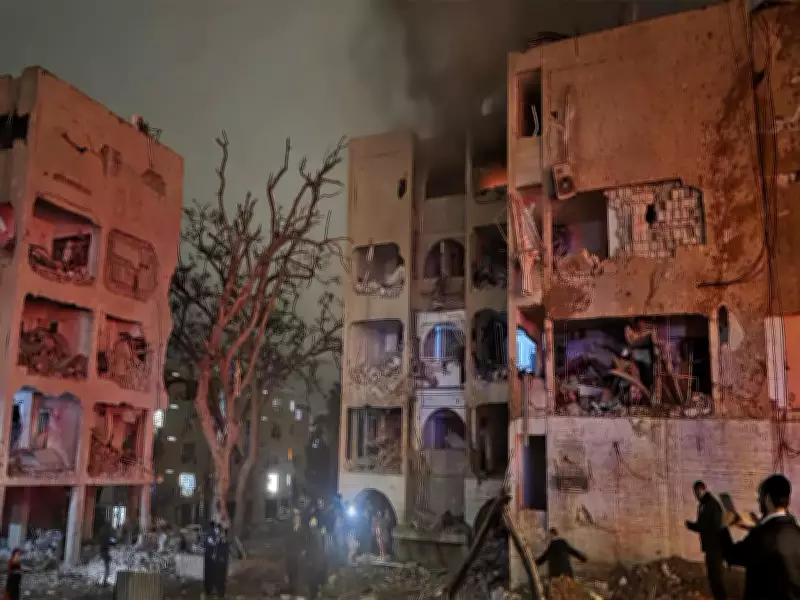
Iran Launches Missile Strike on Israeli Town of Dimona, Injuring Dozens
The ongoing conflict in the Middle East intensified dramatically on Saturday as Iran executed a direct missile strike on the southern Israeli town of Dimona. This aggressive move represents a significant escalation in regional hostilities, with Iranian officials explicitly stating that the attack serves as retaliation for a suspected joint US-Israeli assault on the Natanz nuclear enrichment facility in Iran. However, Israel has firmly denied any involvement in the earlier strike on Natanz, further complicating the geopolitical landscape.
Dimona: A Unique Cultural Hub Known as 'Little India'
Dimona, with a population of fewer than 40,000 residents, is notably home to a substantial and vibrant Indian community. Approximately 7,500 Indian nationals reside in the town, constituting roughly 30% of its total population, which has earned Dimona the affectionate nickname "Little India." The majority of this community are Jewish individuals who trace their ancestral roots back to the Indian state of Maharashtra. This cultural influence is palpable throughout Dimona, with numerous Indian shops dotting the townscape, offering familiar snacks such as sonpapdi, gulab jamun, papri chaat, and bhelpuri.
Beyond culinary delights, Marathi is among the most commonly spoken languages in Dimona, and cricket enjoys popularity as a beloved sport. The town's cultural significance was highlighted in November of last year when it hosted the second edition of the Indian Film Festival in Israel, an event organized by the Indian embassy, underscoring the strong ties between the local community and Indian heritage.

Strategic Target: Proximity to Nuclear Research Center
The selection of Dimona for the Iranian missile strike is not coincidental but reflects a calculated tit-for-tat response. Dimona is situated in close proximity to the Negev desert, which houses Israel's Shimon Peres Negev Nuclear Research Centre, a critical facility in the country's nuclear program. This strategic targeting suggests Iran's intent to signal its capability to strike near sensitive Israeli installations, escalating the stakes in the conflict.
In the aftermath of the attack, the Israel Defence Forces (IDF) announced an investigation into a failure of their air defence systems. According to military reports, interceptors were deployed to engage the incoming Iranian ballistic missile but ultimately failed to bring it down, raising concerns about defensive vulnerabilities.
Casualties and International Response
The missile strike resulted in significant human casualties, with at least 47 people injured, according to officials from the Magen David Adom (MDA) rescue services and local residents. Among the wounded, a 12-year-old boy remains in serious condition after being struck by shrapnel, highlighting the tragic impact on civilians. Additional injuries include a woman in her 30s who sustained moderate injuries from flying glass, 31 others with minor wounds from shrapnel or injuries sustained while rushing to shelters, and 14 people treated for acute anxiety at Soroka Hospital in Beersheba, southern Israel.
In response to the attack, the International Atomic Energy Agency (IAEA), the UN nuclear watchdog, issued a statement noting that there were no indications of damage to the nearby nuclear research center. The agency called for "maximum military restraint" following the incident, emphasizing the need to de-escalate tensions in the region.
This development marks a dangerous new phase in the Middle East conflict, with Iran vowing further retaliatory actions and Israel on high alert. The targeting of Dimona, with its unique cultural identity and strategic location, underscores the complex interplay of military, political, and social factors driving the ongoing war.