

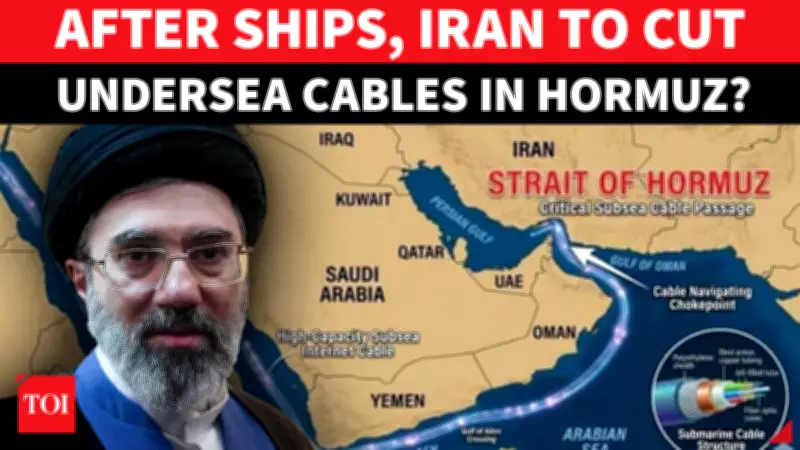
Iran Hints at Undersea Cable Strike as Hormuz Situation Turns Explosive
While global attention remains fixed on missile launches and oil tanker incidents, a more subtle yet potentially devastating threat is emerging from the depths of the Persian Gulf. Iran is now signaling a strategic shift toward targeting the undersea data cables that form the backbone of the region's digital economy.
The Digital Chokepoint Emerges
A recent warning from media outlets connected to Iran's Islamic Revolutionary Guard Corps (IRGC) has revealed that the Strait of Hormuz represents more than just a critical energy transit route. According to these reports, the strategic waterway also serves as a crucial digital chokepoint where vital undersea communications infrastructure converges.
This invisible network of fiber-optic cables carries approximately 97% of global internet traffic, making it essential for everything from international banking transactions to everyday communications across the Gulf region. The IRGC-linked media specifically highlighted how this infrastructure supports the economies of the United Arab Emirates, Qatar, and Saudi Arabia.

Regional Internet Blackout Looms
Military analysts are now questioning whether a coordinated attack on these undersea cables could represent the next phase of the escalating 2026 regional conflict. Such an attack would potentially cripple digital connectivity across multiple Gulf nations simultaneously, creating what experts describe as a "regional internet blackout" scenario.
The timing of these warnings coincides with heightened military activity in the Strait of Hormuz, where recent vessel incidents have already created volatile conditions. Security experts note that targeting undersea infrastructure represents a significant escalation in asymmetric warfare tactics, allowing Iran to project power without direct military confrontation.
Economic and Security Implications
The potential consequences of such an attack extend far beyond temporary internet disruptions:
- Financial systems could experience catastrophic failures as banking transactions and stock market operations grind to a halt
- Emergency services and critical infrastructure management would face severe communication challenges
- International business operations throughout the Gulf region would be severely impacted
- Government communications and diplomatic channels could be compromised
This development comes amid broader regional tensions that have seen multiple incidents involving commercial and military vessels in the strategically vital waterway. The Strait of Hormuz serves as a transit point for approximately one-fifth of the world's oil supply, making any disruption there a matter of global concern.
Defense officials from affected nations are reportedly reviewing their undersea cable protection strategies while cybersecurity experts are developing contingency plans for potential infrastructure attacks. The situation remains fluid as diplomatic efforts continue alongside military preparations throughout the Persian Gulf region.






