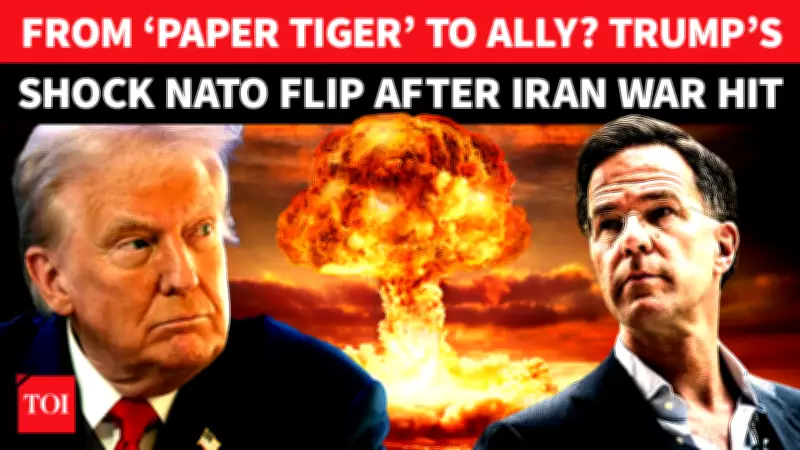
The ongoing conflict with Iran has reportedly forced former President Donald Trump to reconsider his previously dismissive stance toward NATO. Just months after labeling the alliance a “paper tiger” and questioning whether European allies would support the United States in a major conflict, the Trump administration is now exploring the expansion of nuclear-sharing arrangements across Europe.
Nuclear Sharing Expansion Under Discussion
According to media reports, U.S. officials have signaled openness to deploying nuclear-capable assets beyond the six NATO countries that currently host them. This potential expansion comes as the Trump administration reduces troop levels in Europe while simultaneously seeking to reassure allies that America’s nuclear umbrella remains intact.
Shift in Stance
Earlier this year, Trump had openly criticized NATO members for failing to meet defense spending targets, suggesting that the U.S. might not come to their defense in the event of an attack. However, the escalating war with Iran appears to have prompted a strategic recalibration.

“The administration is now recognizing that a strong NATO is essential to counterbalance Iranian aggression,” said a senior defense analyst. “By expanding nuclear sharing, Washington aims to demonstrate commitment without maintaining a large troop presence.”
Implications for European Security
The move could significantly alter the European security landscape. Currently, nuclear-sharing arrangements involve Belgium, Germany, Italy, the Netherlands, Turkey, and the United States. Adding new host nations would likely require delicate negotiations, as several European countries have long opposed nuclear weapons on their soil.
Critics argue that the plan risks escalating tensions with Russia and undermining non-proliferation efforts. Supporters, however, view it as a necessary step to maintain deterrence in an increasingly volatile geopolitical environment.
Reactions from Allies and Adversaries
European allies have responded with cautious optimism, though some express concern about the long-term implications. NATO Secretary-General Jens Stoltenberg welcomed the U.S. commitment but stressed the importance of consultation among member states.
Meanwhile, Iran has condemned the potential expansion, with state media calling it a “provocative act” that threatens regional stability. Russia has also warned against any increase in nuclear sharing, vowing to take “countermeasures” if the plan proceeds.
As the Iran war continues to reshape global alliances, Trump’s apparent reversal on NATO underscores the complex interplay between military strategy and diplomacy in an era of great power competition.