

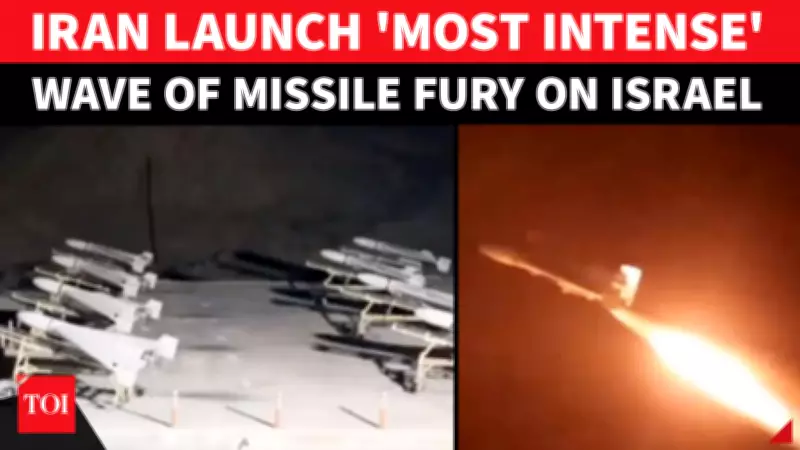
Iran Escalates Regional Conflict with Major Missile and Drone Offensive
The Islamic Revolutionary Guard Corps (IRGC) has confirmed the launch of its 82nd wave of retaliatory military operations, marking a significant escalation in the ongoing West Asian conflict. According to official statements from Iran's elite military force, this latest phase involved coordinated missile strikes and extensive drone deployments targeting assets linked to the United States and Israel across multiple strategic locations.
Sustained Operations Targeting Critical Infrastructure
The IRGC described the operation as sustained and multi-faceted, unfolding over several hours with precise targeting of military infrastructure. Among the primary objectives were airbases, fuel storage facilities, logistics nodes, and advanced radar systems throughout the Gulf region. The Iranian forces specifically highlighted strikes against assets connected to Israel, though exact locations remain unspecified in the initial reports.
In a notable tactical development, the IRGC emphasized the use of swarm drone tactics against high-value surveillance platforms. These included both airborne aircraft and sophisticated satellite communication systems that the United States and its allies rely upon for regional monitoring and intelligence gathering.

Coordinated Axis of Resistance Operations
Beyond Iran's direct military actions, the IRGC statement revealed extensive coordination with allied groups across what Tehran describes as the "Axis of Resistance." The Revolutionary Guard claimed that within a single 24-hour period, a total of 230 separate operations were conducted through this network of regional partners.
The coordinated efforts reportedly involved:
- Hezbollah forces operating from Lebanon
- Various Iraqi armed groups aligned with Iranian interests
- Direct Iranian military units across multiple theaters
This represents one of the most comprehensive displays of coordinated action among Iran's regional allies in recent months, suggesting an increasingly unified front against perceived American and Israeli influence in West Asia.
Regional Implications and Escalating Tensions
The 82nd wave of operations comes amid heightened regional tensions and represents a continuation of Iran's stated policy of retaliation against what it views as hostile actions by the United States and Israel. The targeting of logistics and surveillance capabilities specifically indicates a strategic approach aimed at degrading the operational effectiveness of opposing forces in the region.
Military analysts note that the combination of missile strikes and drone swarms presents particular challenges for regional defense systems, as it requires simultaneous engagement capabilities against both high-speed ballistic threats and numerous low-flying unmanned systems. The IRGC's emphasis on sustained operations over several hours further suggests evolving tactics designed to overwhelm defensive responses through prolonged engagement.
As the conflict continues to develop, regional powers and international observers are closely monitoring the situation, particularly given the involvement of multiple non-state actors alongside conventional Iranian military forces. The scale and coordination of these latest operations signal Iran's continued commitment to projecting power across West Asia through both direct action and proxy networks.






